Browsing Category

The Anthology

Why I’d choose the forest over a four-star resort

I hate to brag but… I went camping. Plus, bento-box purses, a fresher take on the Odyssey, Exit Party, and more.

In case you’d like to hear the sweet sound of my nasally voice mispronouncing the Latin name for things, I’ve started recording audio for my Substacks, which you can listen to here.
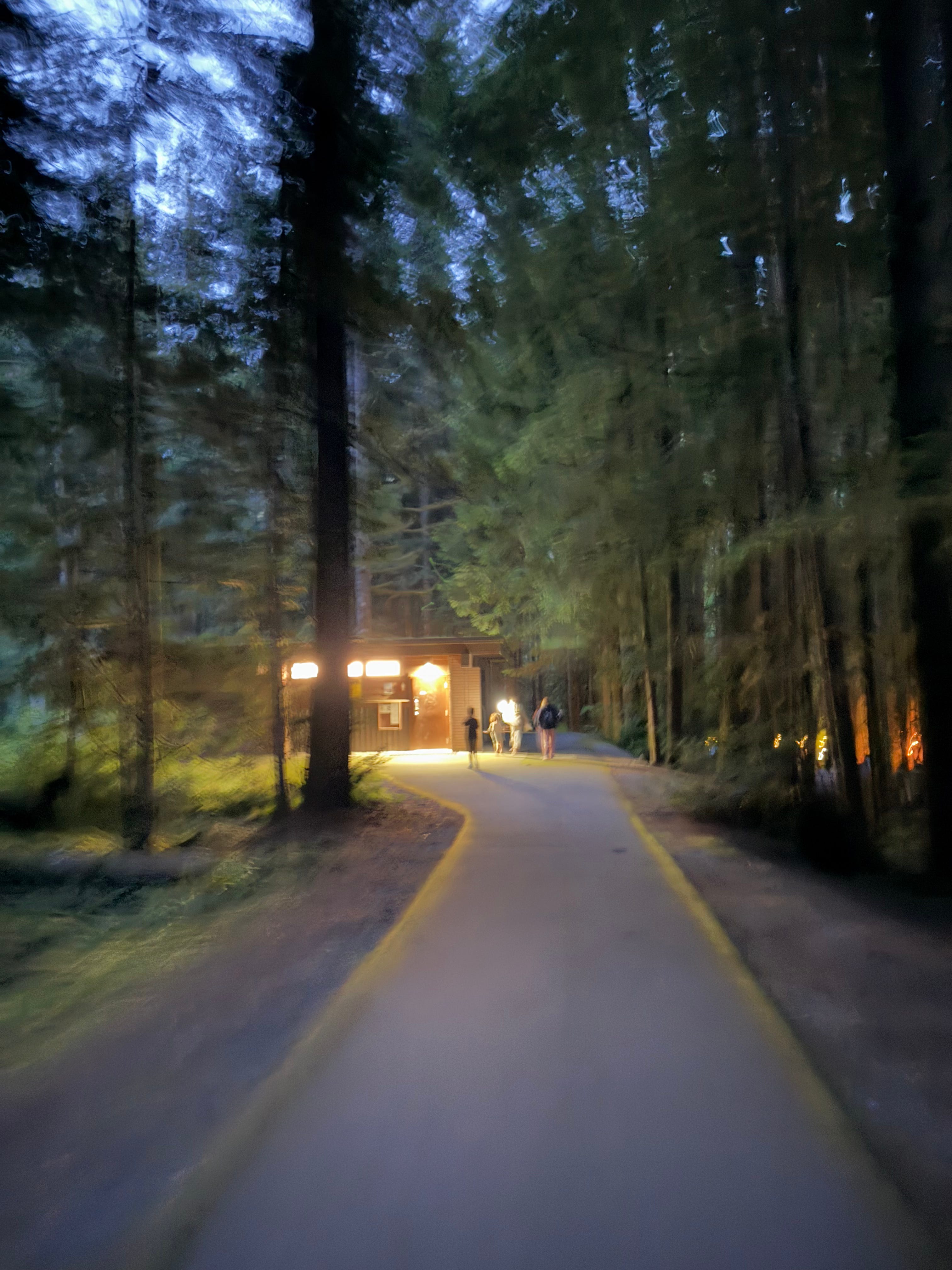
Not a four-star resort.

Here’s a q 4 u: would you rather sleep in a four-star resort or in the forest?

I vote forest. And I’m not even kidding.

I took my kids camping (the first night on my own, the second night with a friend and her kids) and then we went to Whistler where I discovered something I’ve long suspected about myself: I’m happier in the woods.

A lake is more fun than a pool. I’d take a campfire over a sauna any day. A view of the mountains is nice, but I’d prefer to hike them.

Letting my kids spend hours trying to flip each other out of the hammock beats having them bounce off the walls of a hotel room. Seriously.

It’s not even about building character and blah blah blah, it’s more about building fires.

I have a hunch all the unplugged doing is good for our nervous systems. Because you become so occupied with getting ice and firewood and reorganizing the cooler after your kid shoves the ketchup in sideways so it won’t close properly, you don’t fixate on the usual nonsense. Or at least I don’t.
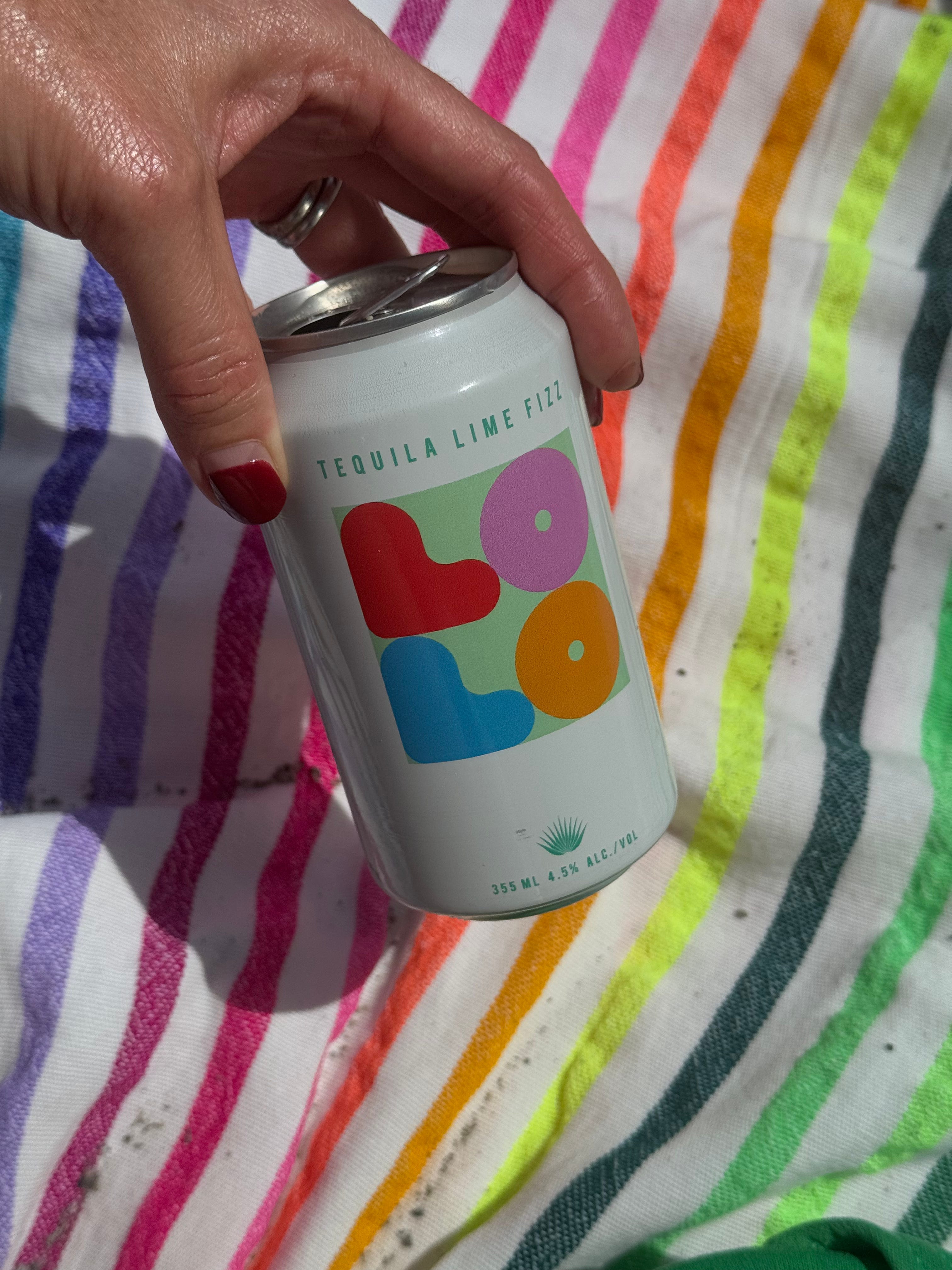
Very much glamping.

We were hardly far from civilization: we could be in town in ten minutes if we wanted to. We had running water, electricity and showers. But we slept under the stars. And had to listen out for bears (one was trawling our campground while we were there).

Twice my five-year-old, beaming from ear to ear, said “I’m just so happy!”

Me too, kid, me too.
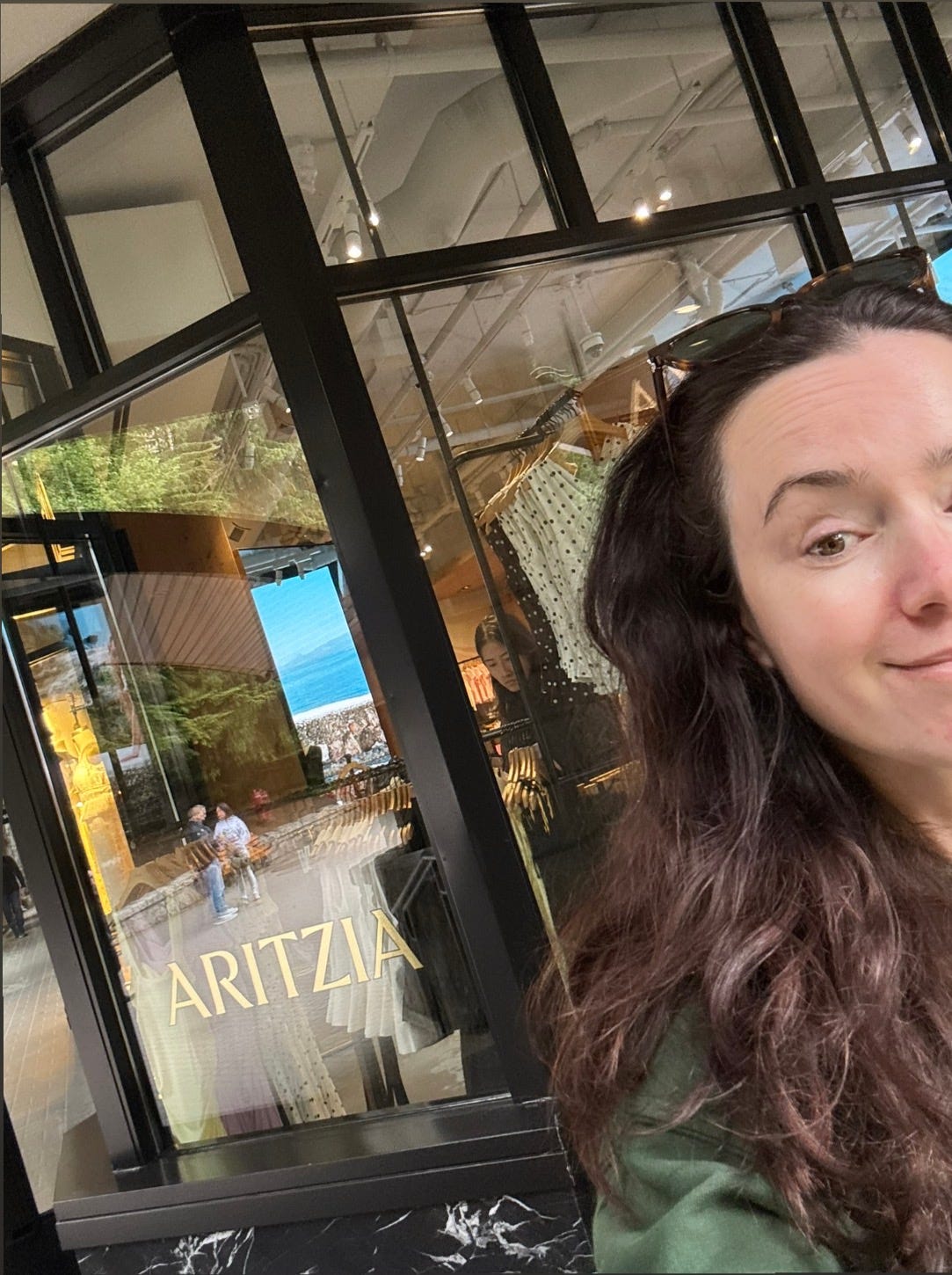
My dog, who was confused for a black bear many times, was way too big to bring in the store.

Plus, when you’re camping, your kids can’t make you take them shopping.

A Substack I wait for each week
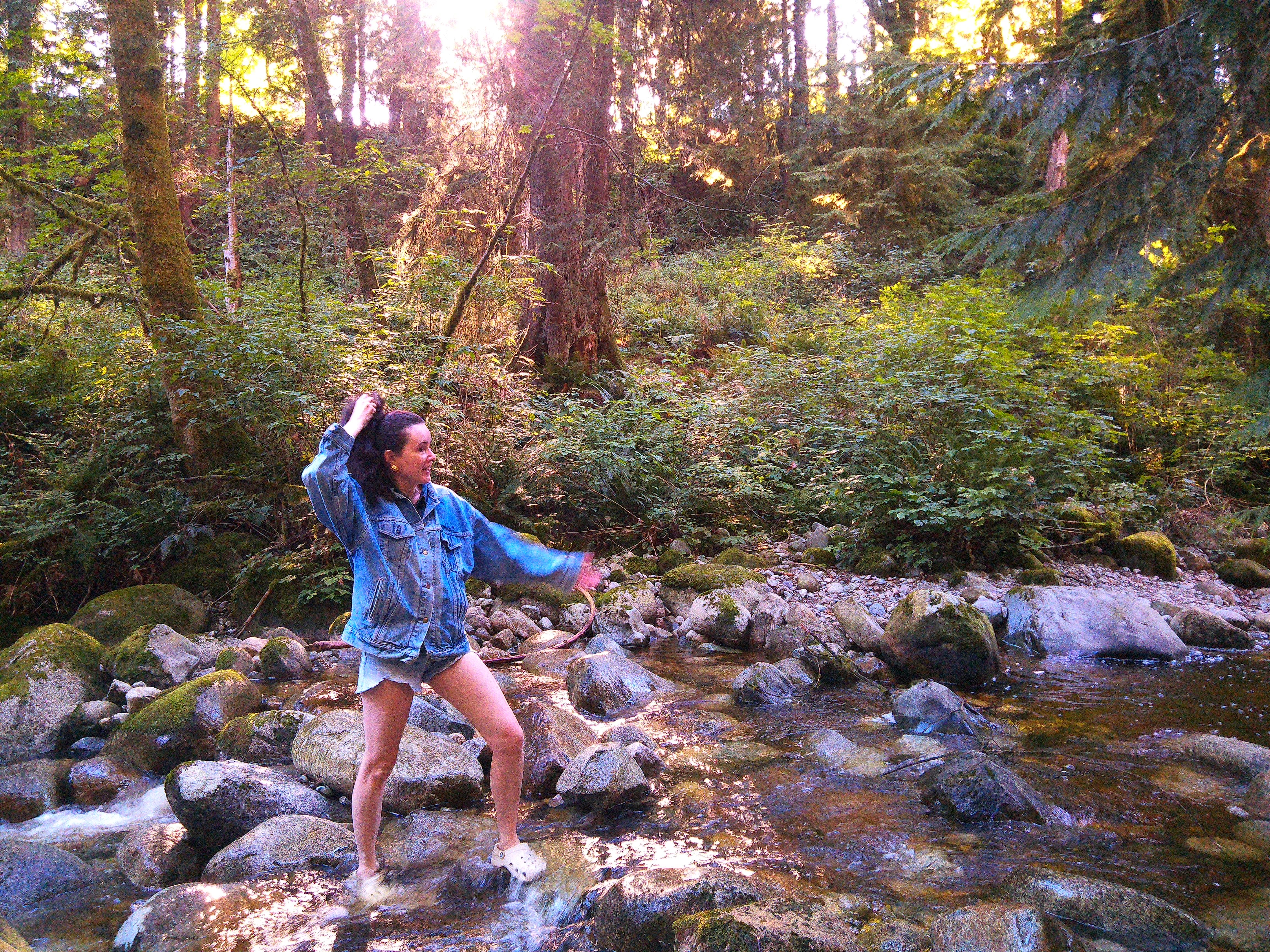
Me, a Canadian in a Canadian tuxedo in a Canadian river… snapped by a Camp Snap.

Nothing makes me feel more with it—and out of it—than Casey Lewis’s Substack After School, which chronicles the trends and habits of Gen Z and Gen Alpha (though I have three of the latter so I feel like I understand that world pretty well, while at the same time, not understanding it at all).

In the latest After School, Casey talks about the rise of the Camp Snap, a screen-free digital camera. My sister-in-law has one and it’s something I’ve been meaning to get for my girls so they’d be forced to take actual photos instead of just doing what they end up doing every time they ask to borrow my phone: recording GRWMs (which, for those of you who don’t have three Gen Alphas as your dependants/roommates, means Get Ready With Me, where people record themselves getting ready for… idk, standing around in a river or whatever).

Worth the Wait
All the links you’ve been waiting for.
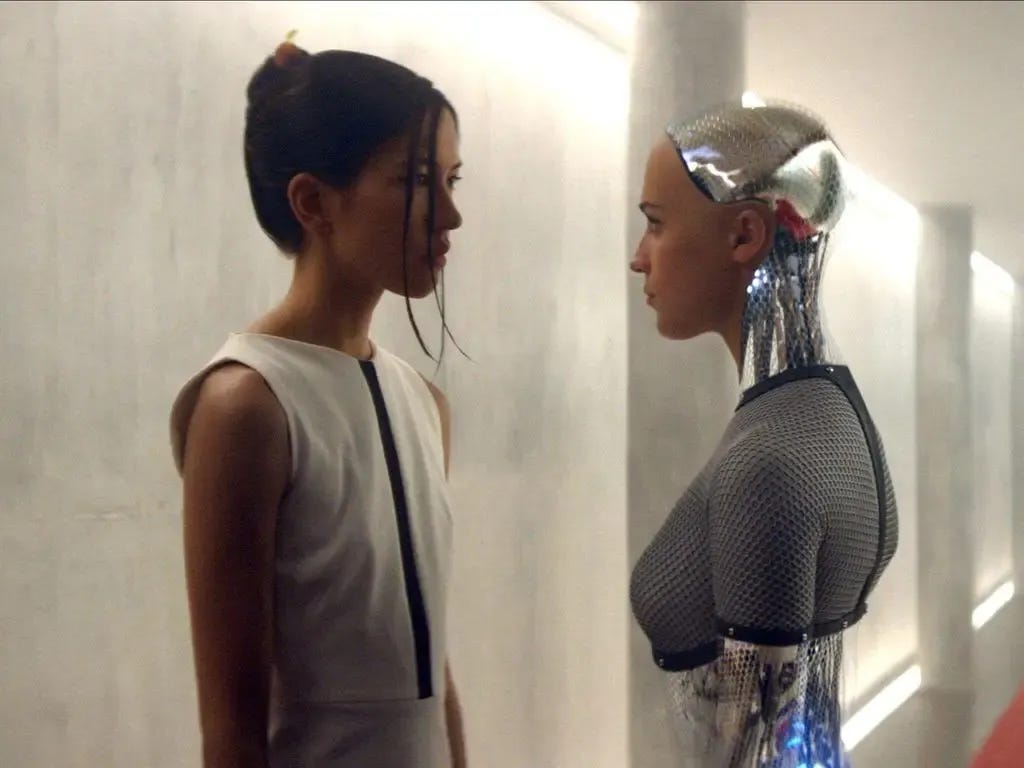
I don’t know if I’ll ever be able to wrap my head around the fact that for my youngest, machines will have always been able to think as far as she’s concerned. The New Yorker wrote about A.I. as a member of the family in their July issue. I wrote about it what it’s like having Alexa in my home in early June.

My littlest is now asking for an Alexa and when I think about the fact that the chatbot is always listening to our conversations (something she weirdly admitted herself when my kid asked her!), it makes me want to replace Alexa with a six-disc CD player.

A few days after I wrote my Robosocial piece, I also posted a Note that said Substack should have a way to let people know if a newsletter has been written by AI. Boy, did the comment threads go in some interesting directions, with people(?) accusing other people(?) of being bots. Honestly I couldn’t even tell.

But the exciting thing about all this is that now, Substack has released a feature that allows you to tell if a piece has been written by AI. The Waited, for the record, is not.
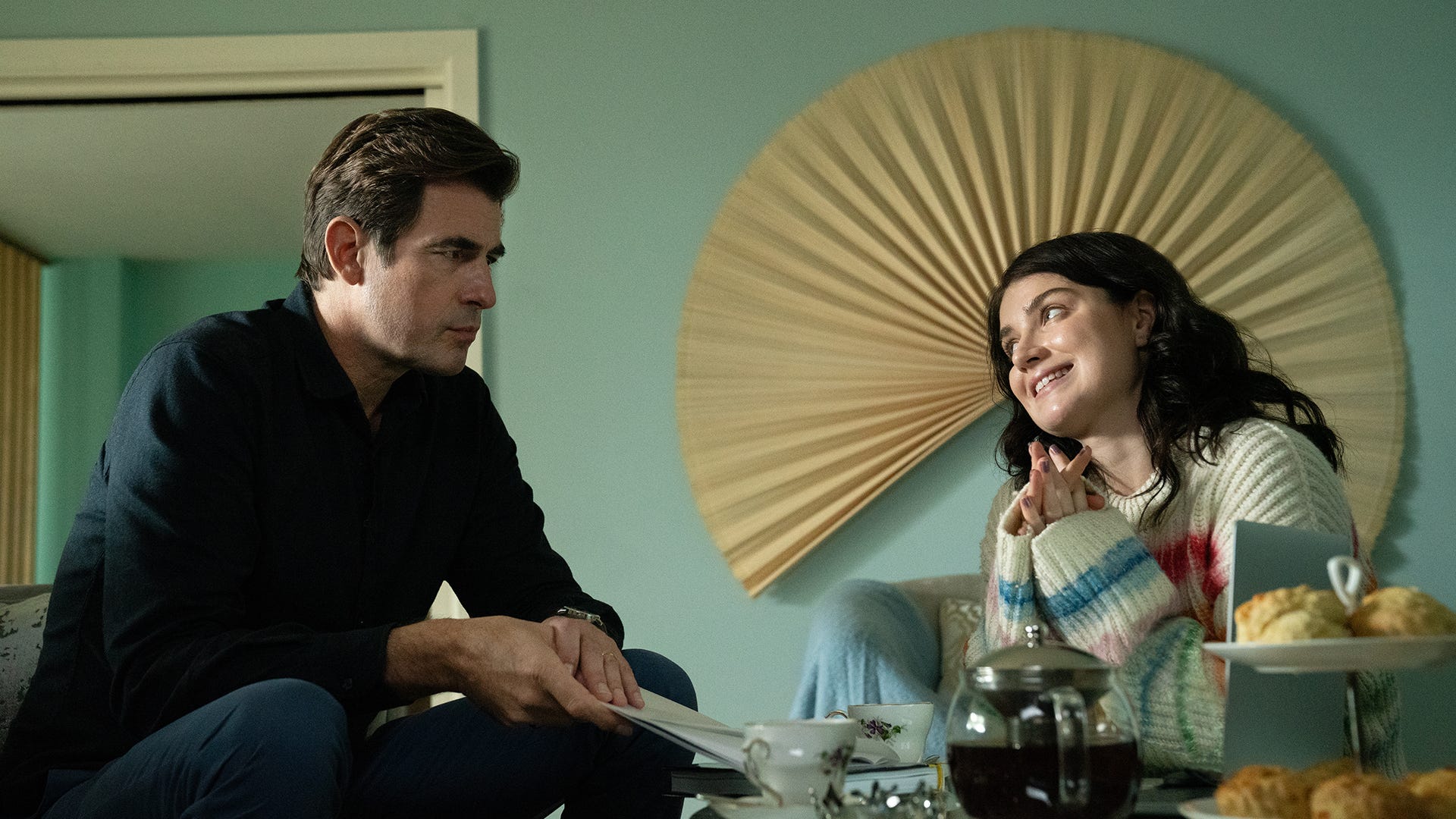
I’m currently watching the dark and hilarious Bad Sisters, which doesn’t quite fill the Widows Bay void, but comes close enough.
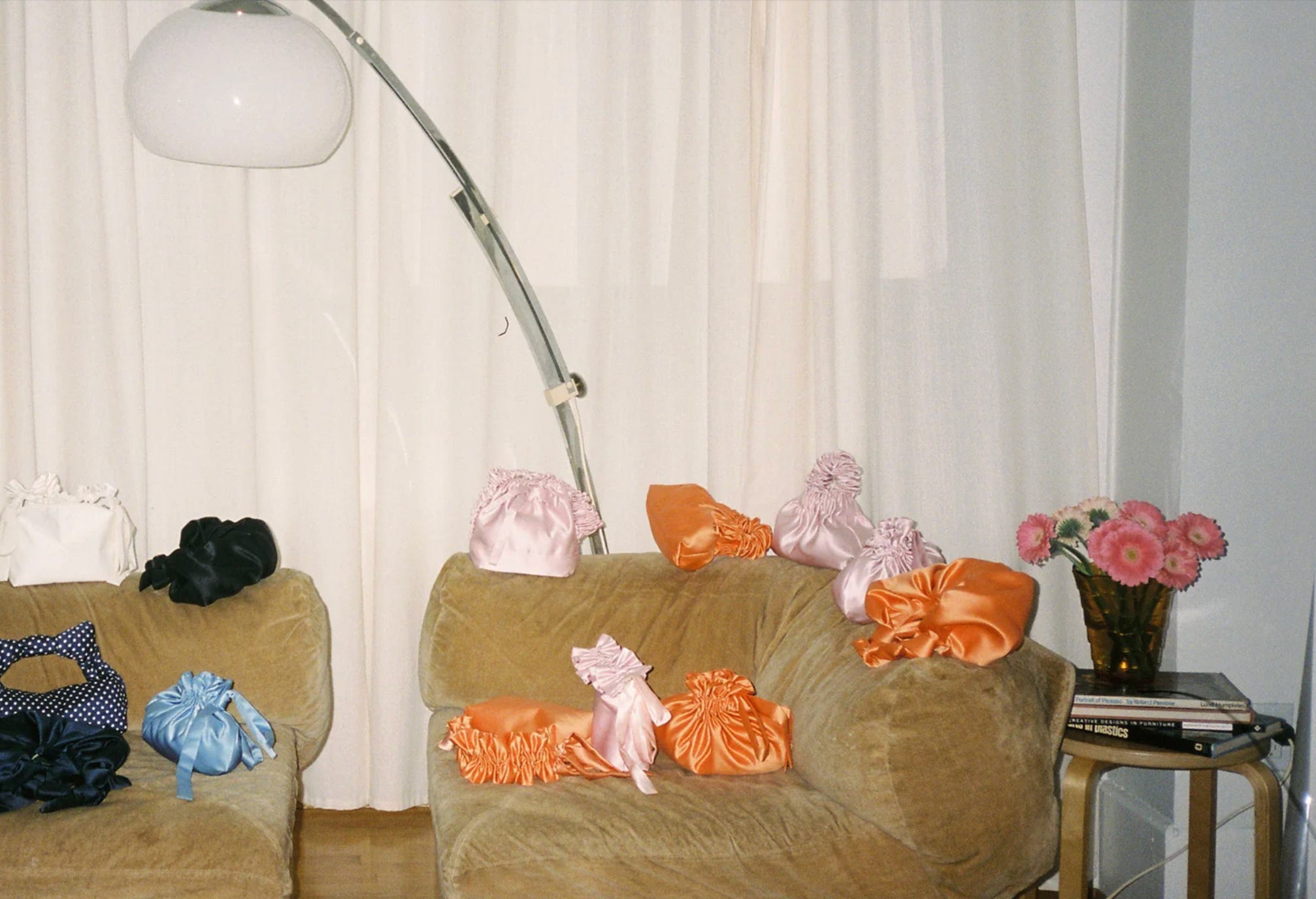
I was going to say A Bronze Age doesn’t feel very Vancouver, but upon further reflection, it actually feels very Mount Pleasant, my old neighbourhood. Not only is A Bronze Age designed in Vancouver, it’s made here too, and in an Amazon world, that’s a beautiful thing. They’re having their summer sale, in case you’d like to get a pair of lace shorts or a headscarf or a bento-box bag everyone will ask you about. (This isn’t an ad, btw!)
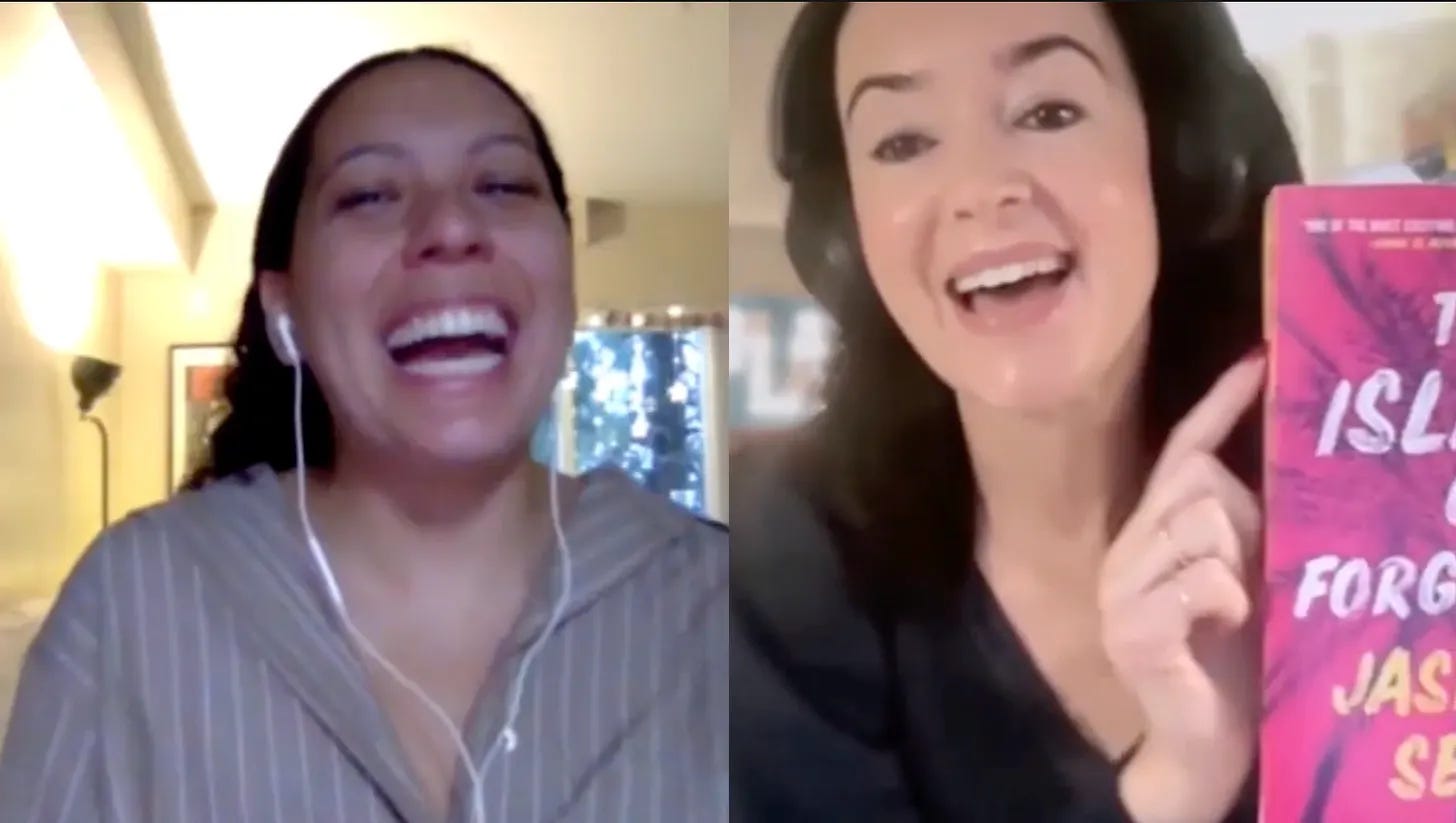
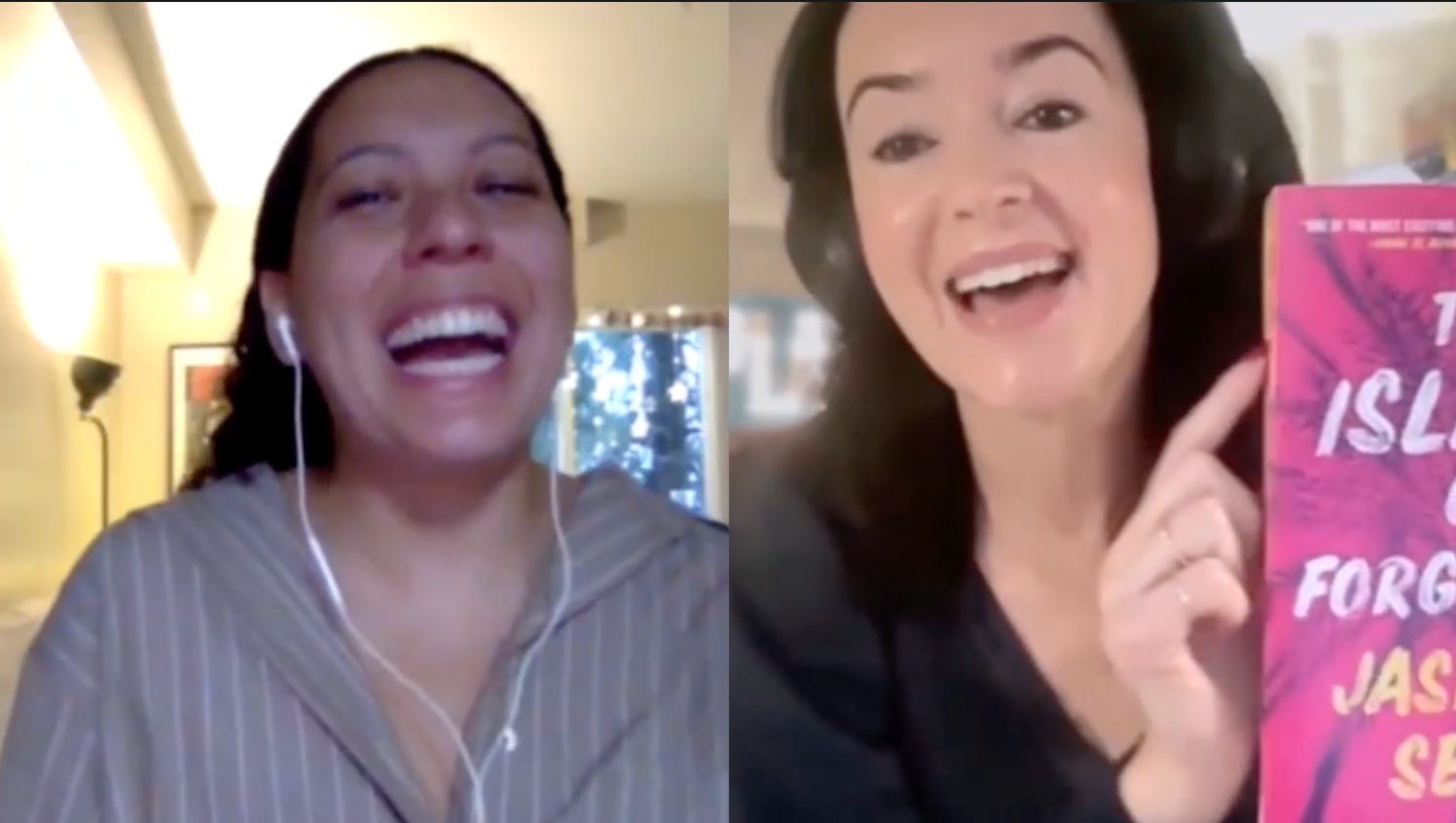
Before Christopher Nolan reinvented the Odyssey, Jasmine Sealy did. Listen to our conversation about about writing, reading, mentoring, parenting, and forgetting what’s in your own book.
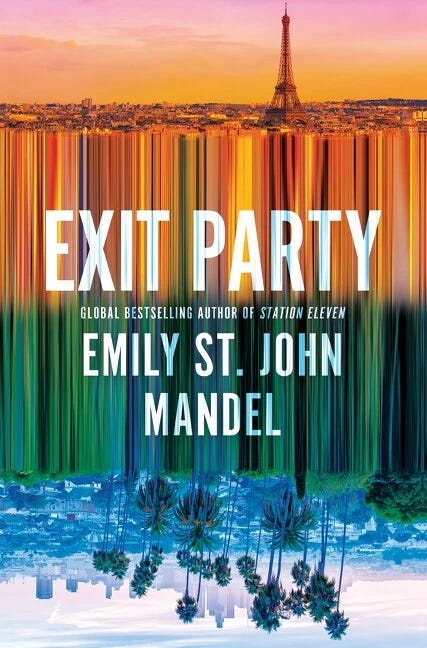
The way Emily St. John Mandel described the rain in the Glass Hotel felt like the most BC thing I’ve ever read. She’s coming to the Writers Festival in September to discuss her newest release Exit Party and you can get tickets here.
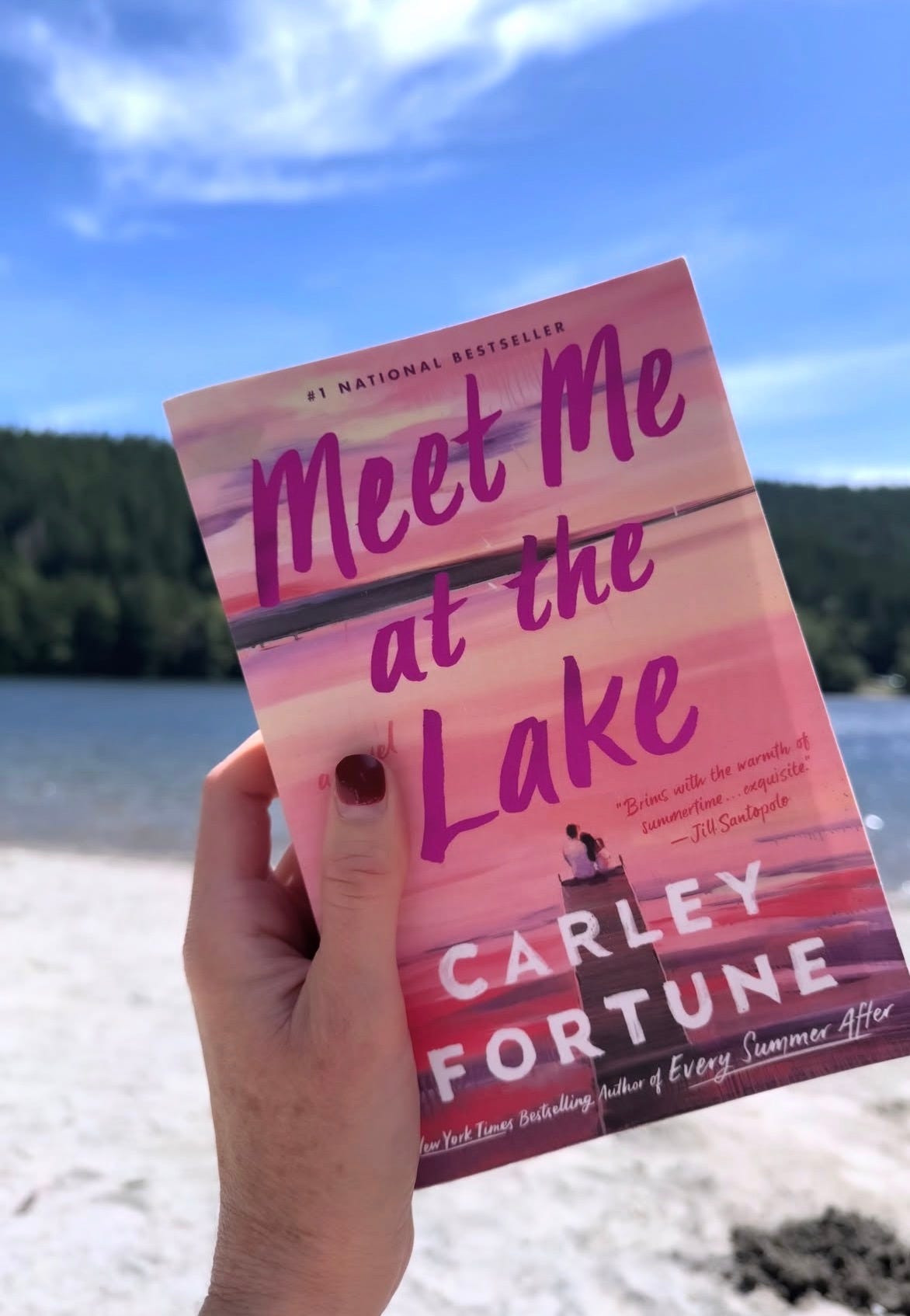
Speaking of international bestselling Canadian authors, I’m currently (finally!) reading Meet Me at the Lake… at the lake. I’ve never been to Cottage Country, but this rom-com reminds me of reading Kit Pearson as a kid.

Thanks, friends! Hope you get to sleep under the stars soon!

Kelsey

P.S. “Hurray for this chat, I loved it! Also love and appreciate all you do to create community 🩷🩷” was SUCH a nice comment (thank you, Kayla!) on this episode of the Waited podcast with Mahsa Di Placito, which you can listen to here.

P.P.S. It’s almost been a year since this incident and my hamstring still hasn’t healed.

Subscribe to The Waited on Substack to get posts in your inbox.
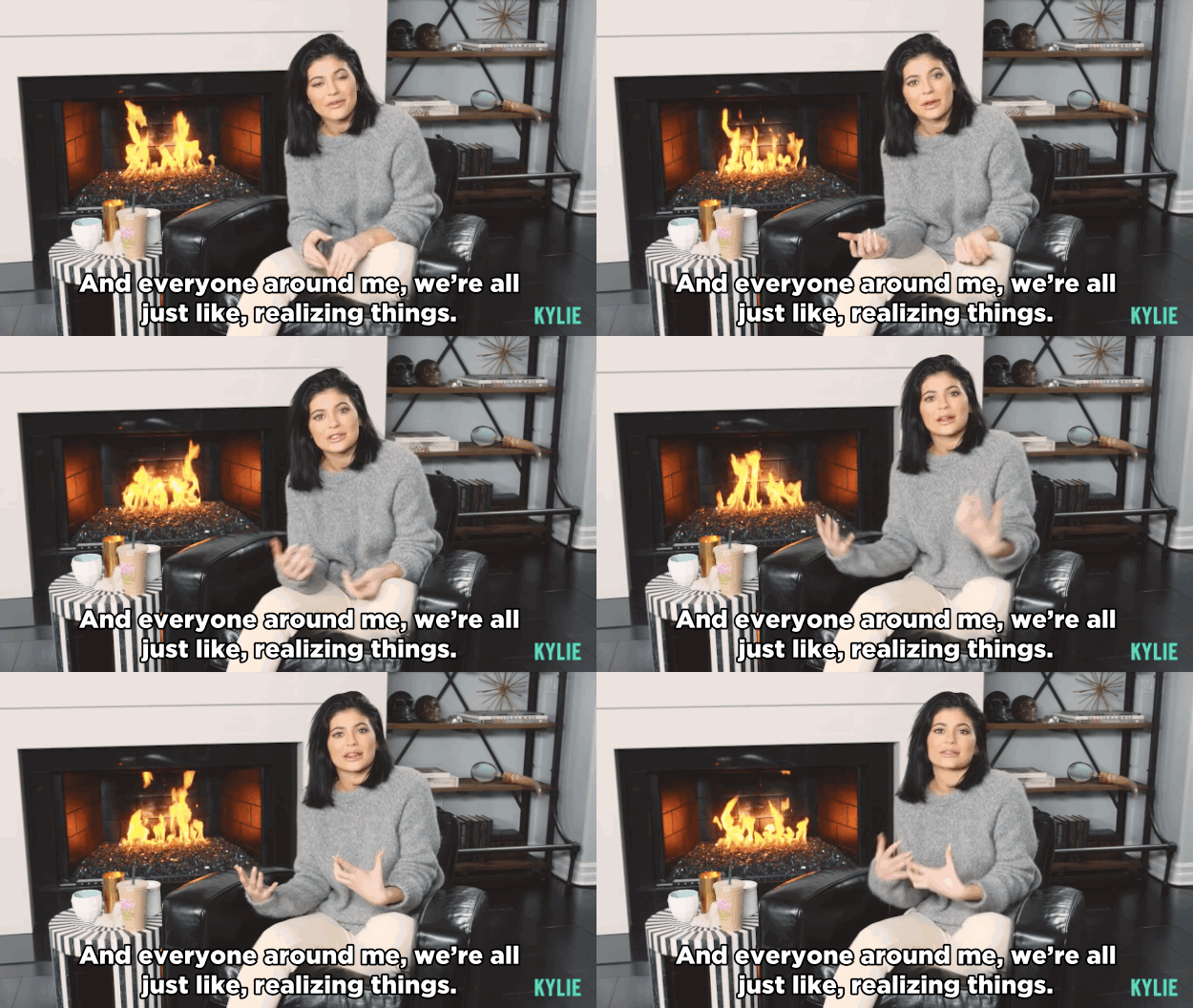
Just like Kylie Jenner predicted…

I’m realizing stuff. Plus, creative friends and why being a professional writer means I’ve taken up glass-making…

Listen to the audio version of The Waited on Substack.

Hi team!

I should start a column all about, in the immortal words of Kylie Jenner, realizing things. Because it wasn’t until I sat down to write about the last few weeks that I realized this particular thing: my friends are exceptionally creative.

Before this epiphany, I thought of them as marketing executives and media personalities and mothers and moguls. But I’ve never actually sat down and thought about how much creativity goes into those endeavours, until two of them hosted very different, very creative events in the same week. (More on those below.) And how, even my most accounting-type friends will happily join me in a creative workshop. (More on that below too!)

I should have known better, but I had fallen into the trap of thinking of people as “creative” in the agency, music or art world sense of the term.

I was a copywriter in the advertising world for many years. Then after an epiphany prompted by accidentally travelling off-the-grid—I.e. I left my phone on the plane in a tangle of blankets after my middle kid was sleeping on my lap on the flight to Munich and then spent three weeks in France and Spain without a phone and had a full-on Oprah aha! moment and realized I wanted to write fiction, which led me to spend many years waking up before my kids and my day job to write my mystery-thriller, which, now that I have an agent, has become a professional endeavour.

Is it too on-the-nose to say I’ve been… waiting for you to:

So I have to get, ahem… creative in searching out opportunities to be creative for creativity’s sake.

Which led me to try glass-making.

I’ve talked about how I think it’s vital to create something—anything. Even if you’re terrible at it. And workshops like this one by Awesome Sauce Designs are the perfectly packaged way to flex your creative muscles without investing a ton of time or overwhelming your art supplies closet with more crafting kits. (Something the author Jasmine Sealy talked about despising on the first episode of The Waited podcast.)

If you’re in Vancouver, MakerLabs offers so! many! workshops! run by makers themselves in a converted warehouse that will make you consider renting studio space and taking up ceramics.

Highly recommend you go—or hunt down something similar wherever you live. Community centres often run these types of things. Bring your most creative friends—or better yet: invite your entire book club.

Worth the Wait

I’m still nursing a Backstreet Boys-related hamstring injury, but am thrilled to report I was able to do high kicks at my friend Jessi Cruickshank’s super-fun, super-sweaty Evening Club. Music is magic.

Speaking of high kicks and creativity—I lived my best WAG life at a World Cup game, a throw-in’s distance (sports analogy? Idk.) from The Beautiful Dome, which was officially named by my sister Larissa Dundon, an absolute creative professional career highlight.

Speaking of sports, active and swimwear brand Left on Friday, which was co-founded by my friend Laura Low Ah Kee and Shannon Savage, has (finally!) opened a Vancouver storefront in Kitsilano, which is coincidentally where the brand was born. The opening party was wild.

Anne Griffiths | Unwavering In My Delusion DIPTYCH, 2026 | Oil and oil stick on canvas

I’m obsessed with the work of Victoria-based artist Anne Griffiths, who’s currently showing at MAAT Gallery in Paris. Her pieces are the abstract equivalent of forest bathing and I want one—or two.

You’ve Been Waiting for: The Return of Wear/Where!

On my lifestyle site The Anthology I had two columns people would mention most often: The first—and I’m pretty sure the reason The Anthology took off in the first place—were my vintage reinvention posts where I’d take an unwearable piece of vintage clothing and have it tailored into something I’d wear again and again.

The second is my Wear/Where column where I’d highlight visual parallels between a look and an interior. The Left on Friday x Clare V. collab, alongside the Architectural Digest spread of designer Clare Vivier’s home in France has brought Wear/Where right back to life in my brain.

Et voila:

Left on Friday x Clare V.
Clare Vivier’s French home in Architectural Digest

Wait for it

Dr. Danya Fast, assistant professor at the University of British Columbia

Next up on The Waited podcast, I’m going to be talking with my friend Dr. Danya Fast, who studies youth and substance use, which is something I’m guessing absolutely none of us want to even think about. But it’s important. It relates directly to one of my favourite topics: community.

And after co-hosting two of these conversations IRL with her, I can absolutely say Danya offers so much hope on the subject.

I’ll happily ask her any questions you’d like (anonymously, if you’d prefer!). Send them to me at: KDundon@NorthillCreative.com.

Thanks, y’all!

Kelsey

P.S. I really miss the social elements of the agency world, so I’ve been very deliberate in building my personal community to offset all the time I spend alone with my Word docs.

I talk about how I’ve done that with Mahsa from We Need to Unpack This in the latest episode of The Waited podcast.

Subscribe to The Waited on Substack to get posts in your inbox.

How to lazy-host a book club

Hi! It’s Kelsey Dundon from The Waited and Mahsa Di Placito from We Need to Unpack This.

We’re both writers, bookclubbers and sometimes podcast hosts.

We’re also friends IRL (though, as you’ll hear in the episode, our friendship actually started as a parasocial relationship as a result of this very blog). Since the real world is such a hot topic right now—and books are trending in everything from the fashion world to pop music—we recorded an episode all about building community and keeping it alive for years and years and years. Which isn’t actually as difficult as it sounds, even if you’re a lazy Type B kind of host, like we both are.

In this episode we cover:

  • The genius of McMuffins and Mimosas.
  • What to do if no one’s inviting you to join their book club.
  • Why Mahsa says: If you build it, they will sometimes come.
  • WhatsApp etiquette and “sleeper agent” members.
  • Plus, ideas for clubs that require no reading whatsoever.

But if you’re looking for the TL;DR version, here are our book club rules in a nutshell:

  • We try to do them every few months. We never reschedule if it doesn’t work out…we just keep moving. That keeps the momentum going.
  • We have a WhatsApp but I send official invites through Paperless Post.
  • We host them at restaurants because many of us have young kids which makes weeknight hosting difficult. Though, as you’ll hear in this episode, Mahsa hosts her book clubs at people’s homes.
  • It doesn’t matter if you’ve read the whole book or haven’t even cracked the spine—we have a rule where everyone’s allowed to say anything about any point of the book (spoilers are welcome!) because if you (I) didn’t finish in time that’s your (my) own fault.
  • I used to encourage people to come prepared with questions and now that I just dug up my original invite email from ten years ago, I’m thinking I should reinstate that rule:
    • Please come prepared with 2-3 questions to discuss (you can pull them off the internet. We won’t judge). My mother, a professional book club member, insists we also have someone give a quick book/author background chat to start things off so I can do that.

Find Mahsa Di Placito

On Substack: We Need to Unpack This, a pop culture deep dive.
On Instagram: @haveyouheardpodcast

Thanks!
-Kelsey and Mahsa

P.S. I also helped start a book club for parents and caregivers at my kids’ school and here’s how we did it, step by step.

P.P.S. For more conversations about living a creative life amidst the chaos of everyday life, subscribe to The Waited on Substack.

The robosocial relationships in our lives

Listen to the audio version of this article on The Waited on Substack.

Hi team!

I just recorded a podcast episode with my friend Mahsa di Placito of We Need to Unpack This. And after we stopped recording (of course) we had an extended conversation about parasocial relationships, which is something I think about often.

If you’re not familiar with the concept of a parasocial relationship—it’s like how you’re best friends with Amy Poehler, even though you’ve never met. Or how you’re in a long-term relationship with Matt Damon, although he has no clue.

My first job job was as a research assistant at a TV news station and one of the on-air personalities explained this phenomenon to me using what is now an old-timey example: as an on-air personality, you’re in someone’s living room every day so their brain recognizes you as a friend.

It makes sense. Our brains evolved for the real world, where we only would have been seeing people face to face. Our psyches haven’t caught up to the whole screen distinction.

Enter AI.

Or more specifically: enter Alexa at my house.

A while ago, my youngest, who was three or four at the time, asked Alexa “Are you real?” Which: way to encapsulate the dominant philosophical question of our time, kid.

I don’t remember how Alexa replied—she probably sang a song about being a trusty AI assistant. But it got me thinking about how my youngest will know nothing but intelligent machines. Hers will be the generation that prefers robot surgeons to their human counterpart for their finer motor (ha) skills.

This is already markedly different from the experience of my older two kids, who are five and eight years older than she is. They didn’t grow up talking to robots.

Though they certainly do now.

Not too long ago I overheard my eldest kid complaining to Alexa about something I wouldn’t let her do (probably to do with screens, let’s be honest), the way I would have confided in my diary in the 90s. And if I don’t immediately know the answer to a question—like, say, which capital city sits at the highest elevation?—my middle kid will roll her eyes and ask Alexa before I even have a chance to guess (though I’d for sure be wrong, let’s be honest).

More than once I’ve googled “Term for parasocial relationship with digital things” and every time I do I’m surprised there isn’t one that succinctly encapsulates the phenomenon. There’s Artificial Intimacy and Techno-Intimacy, but those sound pathologized, and then there’s CASA, which stands for Computers Are Social Actors. Try dropping that in a conversation.

So here’s one: Robosocial relationship.

It may already be out there, but the only example I could find of it being used so far was a joke about an AI/human social media platform.

I would like to propose we use it to describe this bigger, broader phenomenon: a robosocial relationship = a parasocial relationship with an artificial intelligence.

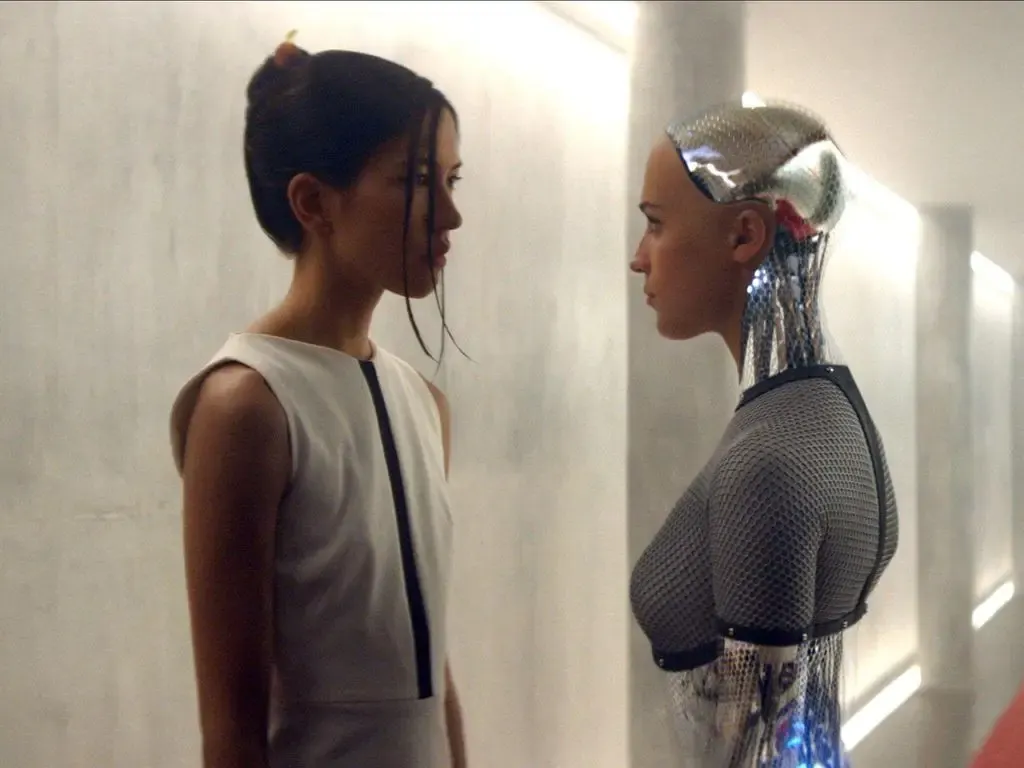
For example: instead of having a therapist, my neighbour is in a robosocial relationship with Claude. Her was about a robosocial relationship. So was Ex Machina (I just rewatched that movie, which came out in 2014 and man, does it feel even more relevant now). I suppose the entire Terminator universe is too.

I think we’re on to something here.

Anyone have a connect at Miriam Webster?

Worth the Wait

I’m not someone to say kids ruin everything, but my kids absolutely 100% completely and totally ruined Lykke Li’s performance at our annual Couchella event. While I tried desperately to relive my glory days, they groaned and whined and begged me to put on whoever else was playing at the time (KATSEYE? More like ROLLSEYE, amirite?).

Anyway—those of you who are not my children will be thrilled about Lykke’s new album. Thank you, Hayley, for sending it my way!

And even my children are thrilled about Drake sampling Lykke’s I Follow Rivers in Janice STFU. Did everyone but me already know he’s a huge fan?

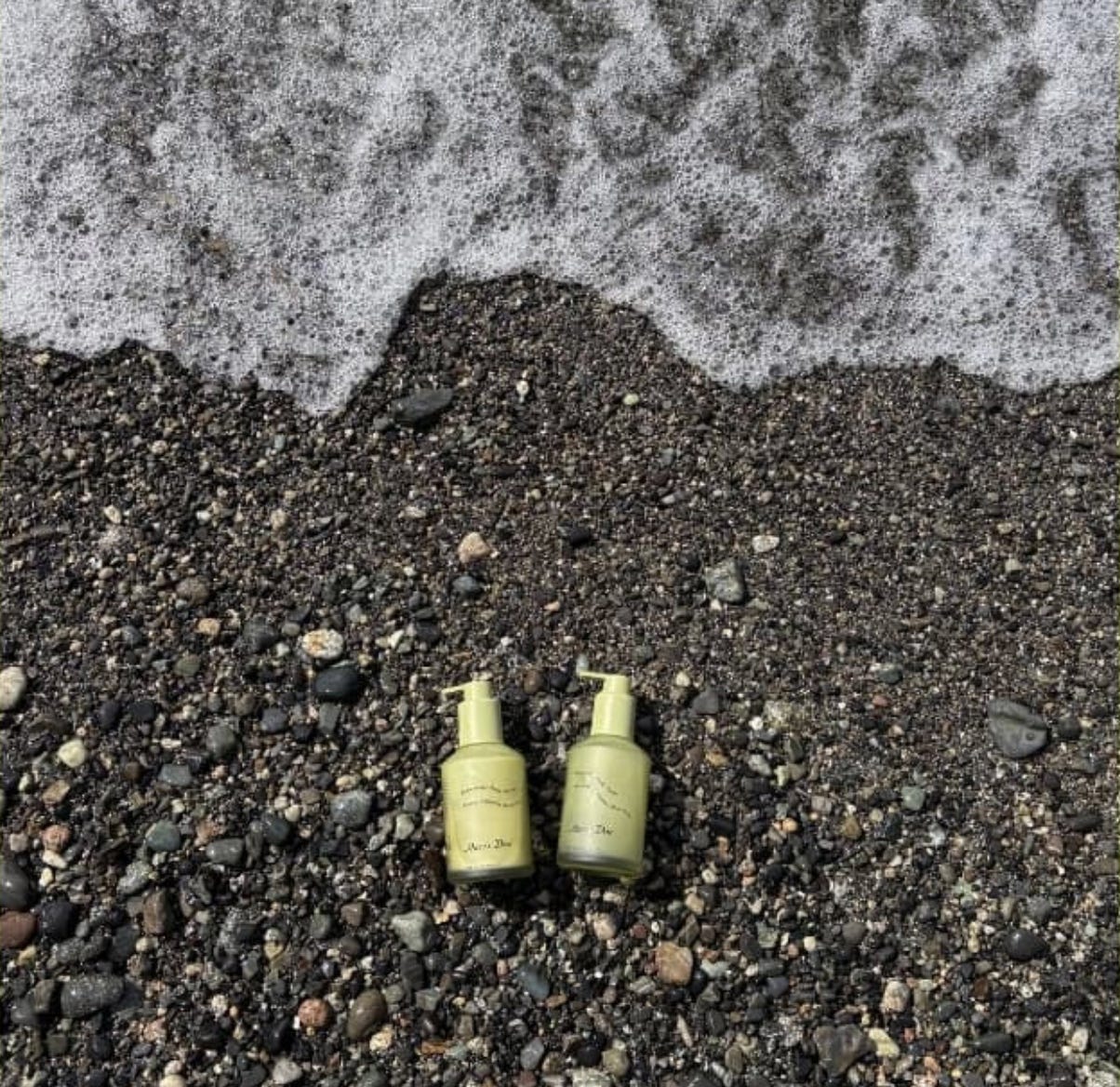
She sells sea-themed anything to me. Vancouver-based Maris Dae (a brand-new brand founded by Sam Rayner of Better Basics fame) has just launched a micro-collection of hand and body care that’s made with—of all things: sea algae. It looks like what a mermaid might have in her bathroom if she was design-y and lived in the Pacific Northwest.

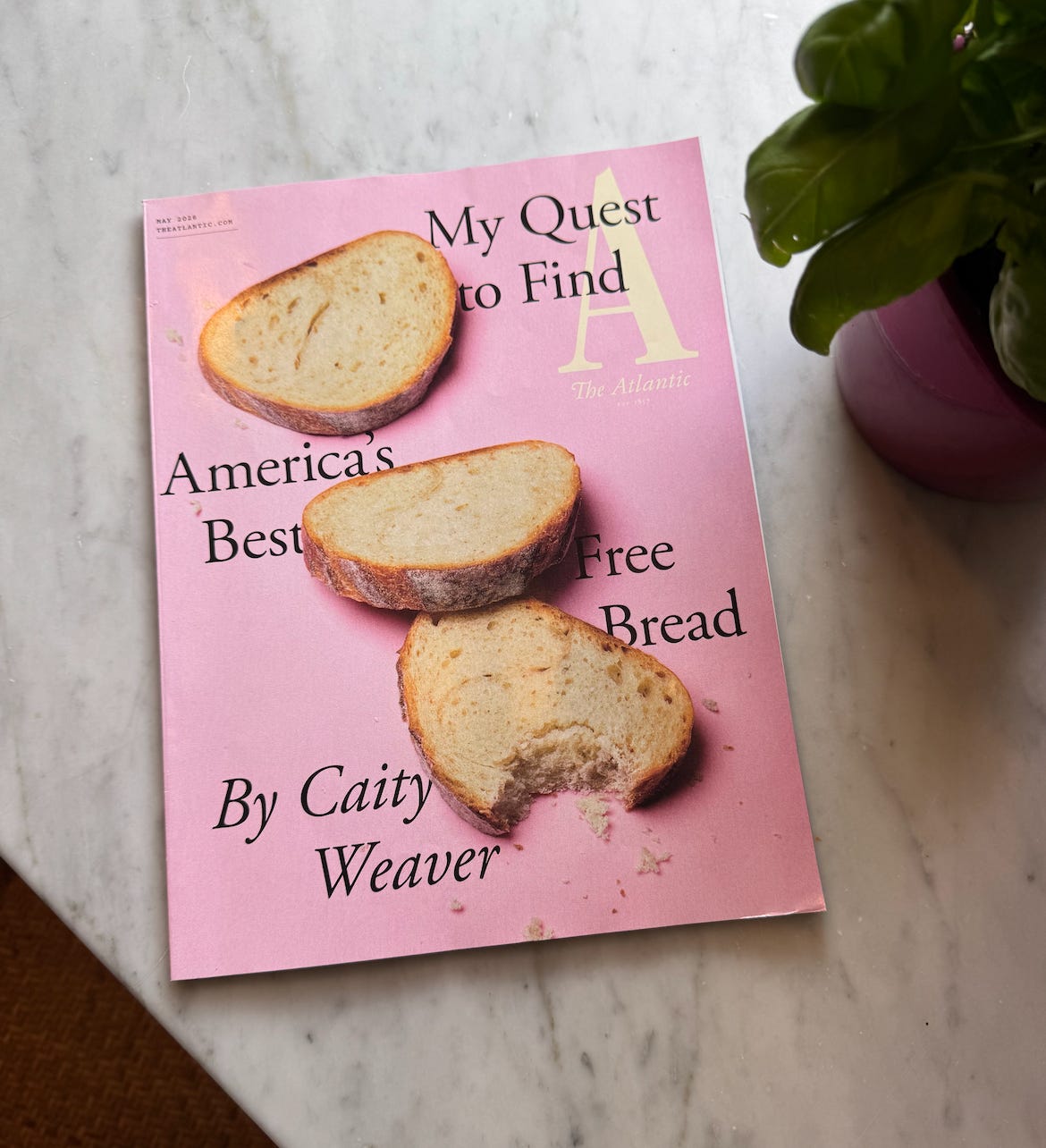
If you, like me, have loved Caity Weaver’s stories ever since you read her profile of The Rock for GQ in 2017, then this Atlantic story about finding the best free restaurant bread in America will be both delightful and heartbreaking.

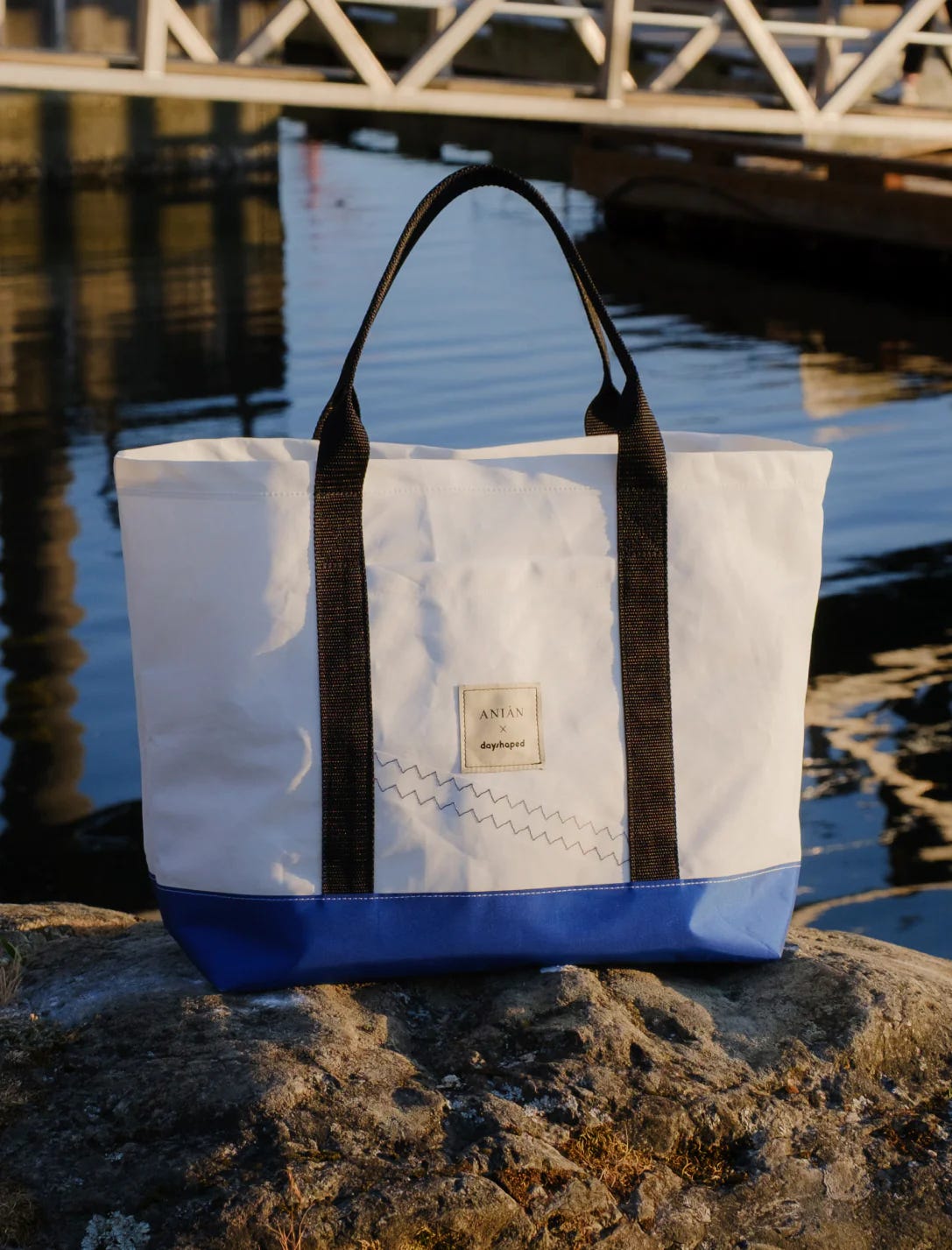
I have So. Many. Bags. But I don’t have one made of recycled sails by Anián and Dayshaped. Yet.

The Grudge Report by comedy writer, children’s book author and memoirist Bess Kalb is the funniest, sharpest, just plain best-est Substack on the entire platform. Case in point: this piece.

Science World, Vancouver’s most iconic landmark, is being transformed into the official soccer ball of FIFA World Cup 2026. I’m willing to bet it’ll be the iconic image of this World Cup, though this will surely be the second.

The installation is called The Beautiful Dome (a nod to the beautiful game, for those of you who aren’t sporty spice). And you know who came up with the name? My sister Larissa Dundon, which is something I will be telling everyone every time it comes up from now until infinity.

Thanks, y’all!

Kelsey
Subscribe to The Waited to get posts straight to your inbox.

P.S. A few weeks ago I co-hosted a conversation about youth and substance use with UBC professor, medical anthropologist and author of The Best Place: Addiction, Intervention, and Living and Dying Young in Vancouver Dr. Danya Fast. It was such a fascinating—and of all things: inspiring—discussion, Danya and I are going to record a podcast episode for every parent of a teen/tween who has no idea where to even begin with all that… and frankly doesn’t even want to think about any of it.

If you have a question you’d like me to ask her, email me!

P.P.S. Before Christopher Nolan reinvented the Odyssey, Jasmine Sealy did. And you can listen to our conversation right here.

Time travel

This post first appeared on Kelsey Dundon’s Substack.

Been thinking about music festivals a lot lately. Because of Bieberchella obviously, but also because the last two Mays we took our whole family to Just Like Heaven, a one-day Goldenvoice festival in Pasadena featuring bands that would have headlined Coachella 15 years ago. (Though this year the Strokes are at both.)

It felt a little like travelling back in time to the days before we owned a Toyota Sienna because we used to love going to music festivals. Coachella especially.

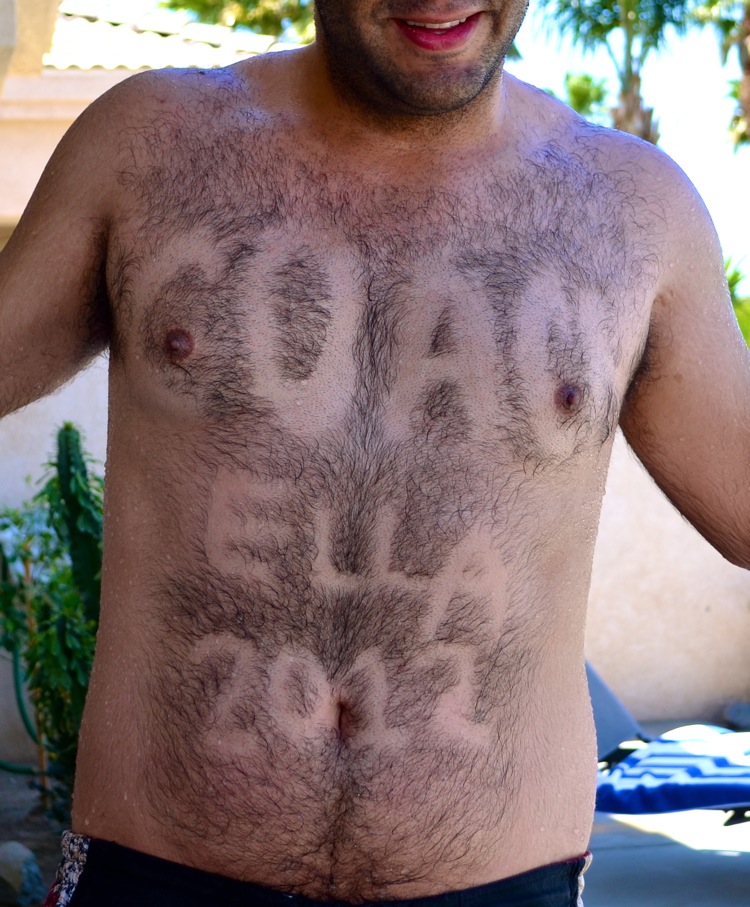
I wish I’d really written about going to Coachella all those years ago, instead of just posting photos of a dude who shaved “Coachella 2012” into his chest hair. (Though it has occurred to me that it would be incredible if the internet were to track that guy down—I think about him every year. Who was he? Who is he now? PTA president, probably.)

But when you’re in your 20s you’re swimming in experiences like that alongside party heroes like that. I used to take them for granted to the point when Pemberton Festival was happening (Coldplay! Jay-Z! Tom Petty!) and I was in Whistler!!! (which, for those of you who aren’t from Vancouver, is a mere 25 minutes away) I couldn’t even be bothered to go.

It makes me want to go back in time and give my young blasé self’s head a shake.

Speaking of going back in time…

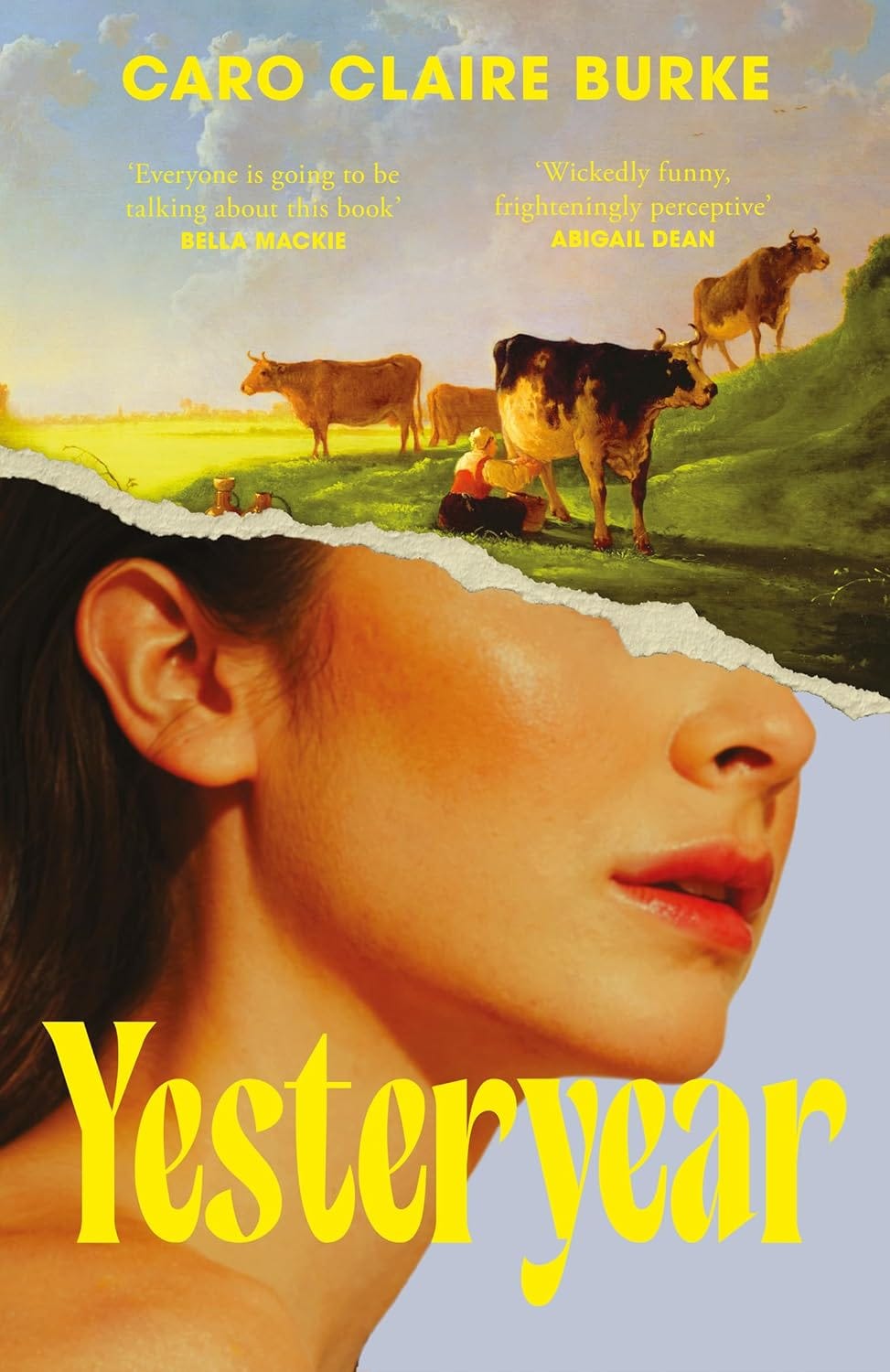
Yesteryear by Caro Claire Burke is everywhere right now and for good reason; its premise is hilarious: a tradwife influencer wakes up in 1855 and must figure out how to survive in a brutally real version of the idealized world she’d been selling to her followers.

My friend Mahsa interviewed the author about writing Yesteryear almost two years ago, making this episode of the Have You Heard? podcast a sort of literary deep cut.

Speaking of cutting deep…

I first met Meghan Nesmith a few years ago and she’s been a guiding light on my journey through the publishing industry ever since (my messages to her read something like: Edits? Pitches? Ack!).

Her latest Substack piece has gone viral—it’s raw and relatable and you should read it, especially if you’ve read (or listened to me talk at you about) Belle Burden’s Strangers. Meghan’s debut novel A World Apart is coming out this November and you can pre-order it here, btw!

Worth the Wait

Thanks, y’all!
Kelsey

P.S. “Was that about me?” and “I feel personally attacked!” are two things I heard after my Saltburn piece.

Subscribe to Kelsey Dundon’s Substack to get posts right in your inbox.
Wait. You never saw Saltburn?

This post first appeared on The Waited on Substack.

I rewatched Saltburn on the flight back from California. I’d downloaded three iPads worth of movies and shows for my kids but somehow convinced myself I would read on the plane (which I never can because my brain cells shrivel up like a water bottle in flight). Luckily I’d downloaded Saltburn for some other trip when I’d had much more reasonable expectations of myself.

Let me tell you: it’s as fun as the first time you watch it. But what I’ve realized from talking to my friends and sisters-in-law since I got back is: many of you haven’t even seen Saltburn once yet.

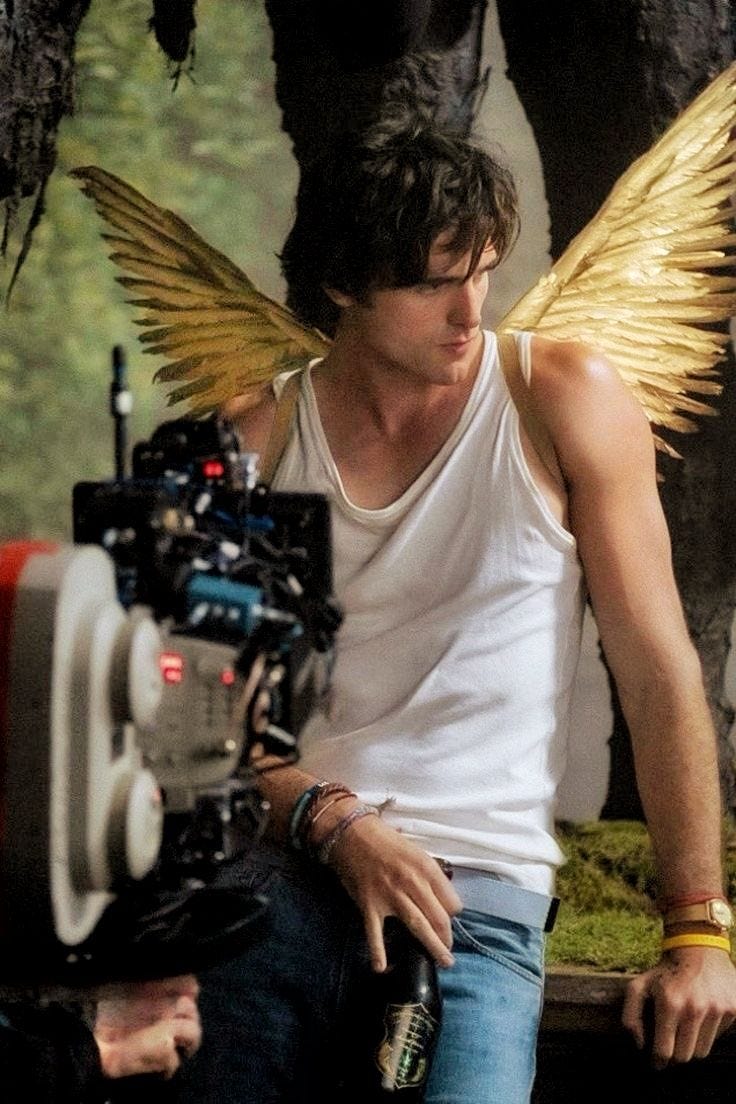
ou need to change that, trust me. It’s a creepy, funny, sometimes graphic Millennial period piece about a group of college-aged haves and havenots in the early 2000s. And, as you may remember from reading countless reviews of Wuthering Heights earlier this year and even more thinkpieces about those reviews: Saltburn was also made by Emerald Fennell. (There’s less wind in Saltburn, but just as much Jacob Elordi, and maybe even more bodily fluids.)

While we’re talking about films, let me, someone who has never taken a single film studies class, take you on a cinematic journey for a moment.

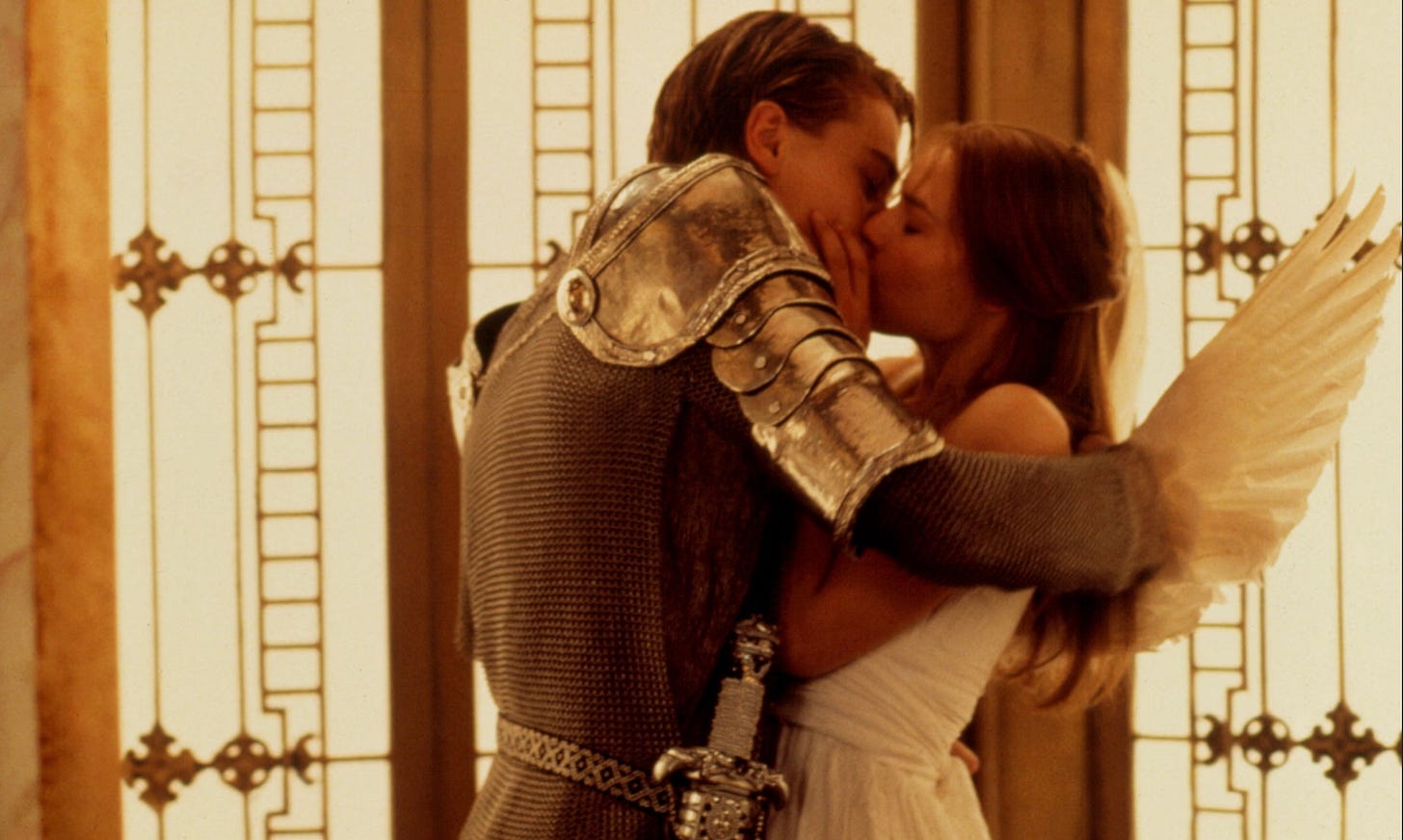
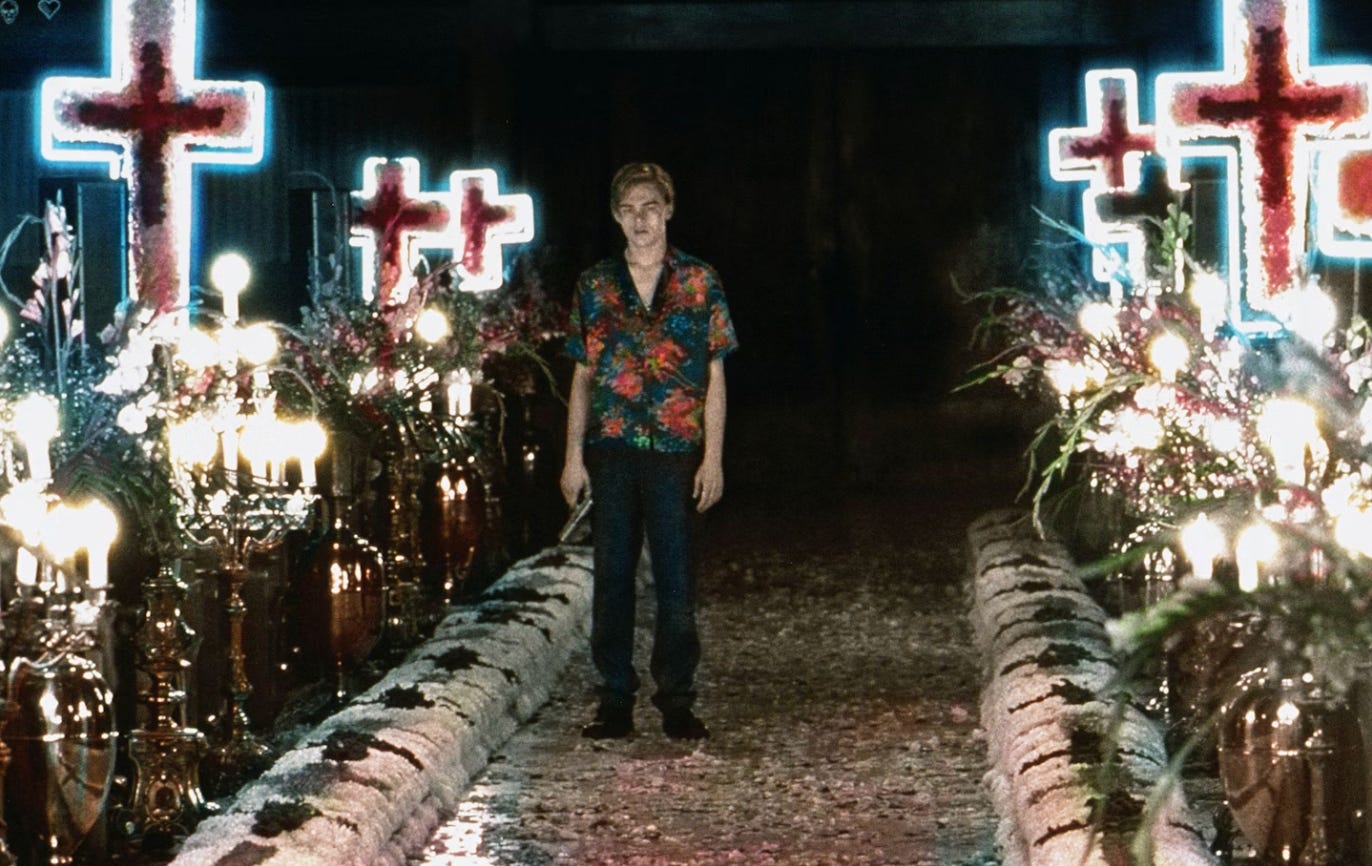
Starting with Baz Luhrmann’s Romeo + Juliet.

I’m going to go out on a limb and say there is no movie more important to the elder millennial cinematic universe; it was fun and fast and beautiful and devastating and surprising and cool. It holds a place in my heart so special I’m afraid to rewatch it because there’s a tiny part of me that’s worried it’s not going to hold up. (It will. It has to. Right?) Though I will rewatch it as soon as my kids are old enough to watch it with me. Which will be very soon (for 2/3 of them, at least) because they’re almost as old as I was when Romeo + Juliet came out.

One of my high school best friends brought the Romeo + Juliet soundtrack to school where I distinctly remember sitting in science class (where else?) pouring over the CD liner notes. In my memory we were looking for clues to what the movie would be like because we hadn’t yet seen it. Google tells me in the 90s they did in fact release soundtracks before films as a marketing tactic, so maybe that timeline holds?

Anyway—everything about Romeo + Juliet was perfect. The soundtrack, the costumes, the Claire Danes. And it was all I could think of while I was watching Wuthering Heights. (Well that, and Jacob Elordi.)

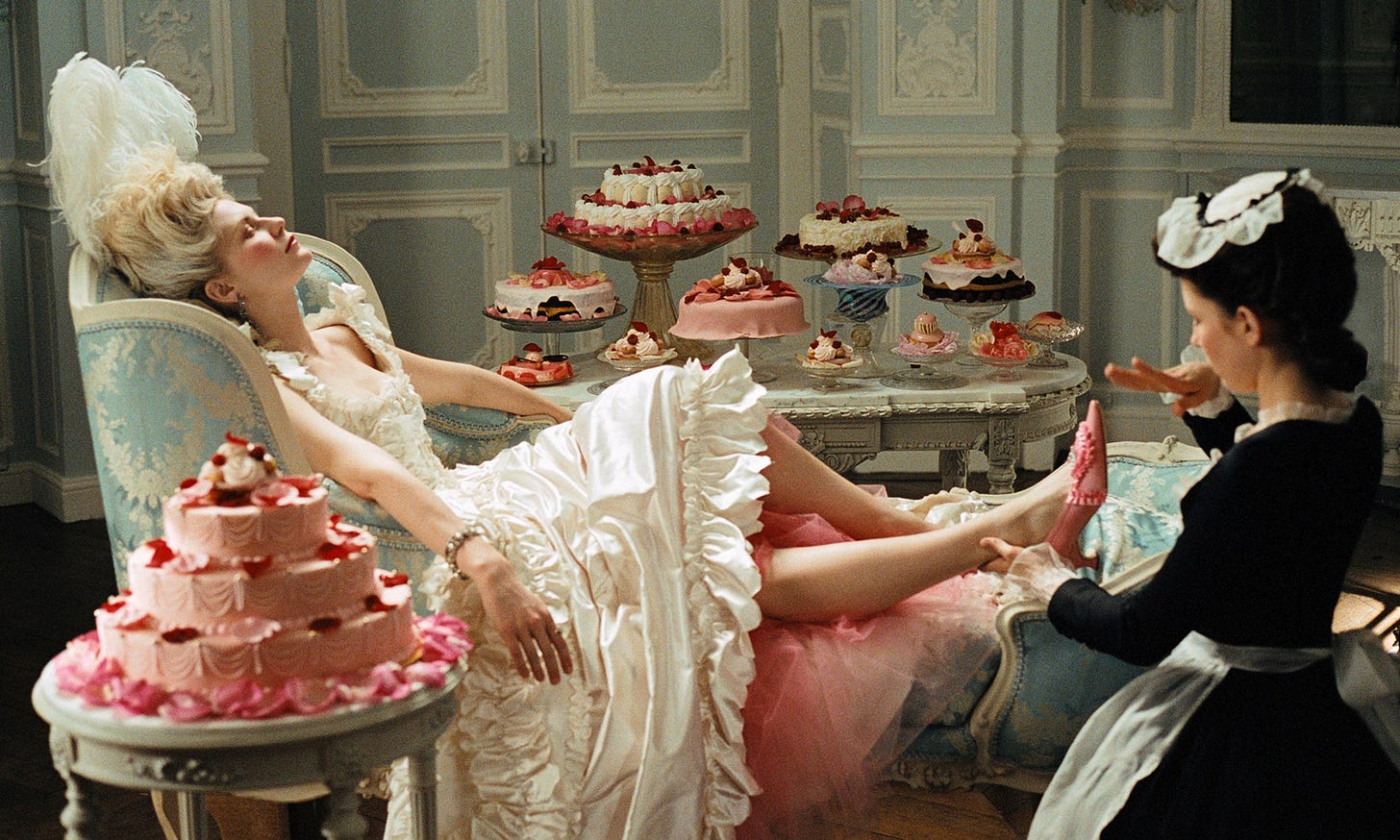
Turns out I, who—again—has never taken a film studies class, am not the only one to have spotted similarities between Wuthering Heights and Romeo + Juliet: Interview has a fascinating conversation between Baz Luhrmann and Emerald Fennell. What they don’t mention, though, is Sofia Coppola’s anachronistic masterpiece Marie Antoinette, which I would like to submit for your consideration.

There’s a real through line from Romeo + Juliet to Marie Antoinette to Wuthering Heights: centuries-old source material reimagined through wild visuals and thoroughly modern soundtracks made for what they would have at one point called the MTV generation (RIP).

They all also—and this might be a Wuthering Heights SPOILER! though there is great debate as to whether or not you can spoil a 178-year-old book—end in tragedy.

My friend Verity pointed out Romeo came out in 1996, Marie Antoinette came out ten years later in 2006 and Wuthering Heights was released, as your Instagram algorithm made very clear a few months ago, in 2026. What does this mean? Why did we skip 2016?

Seems like we’re going to have to binge them all to find out.

Worth the Wait

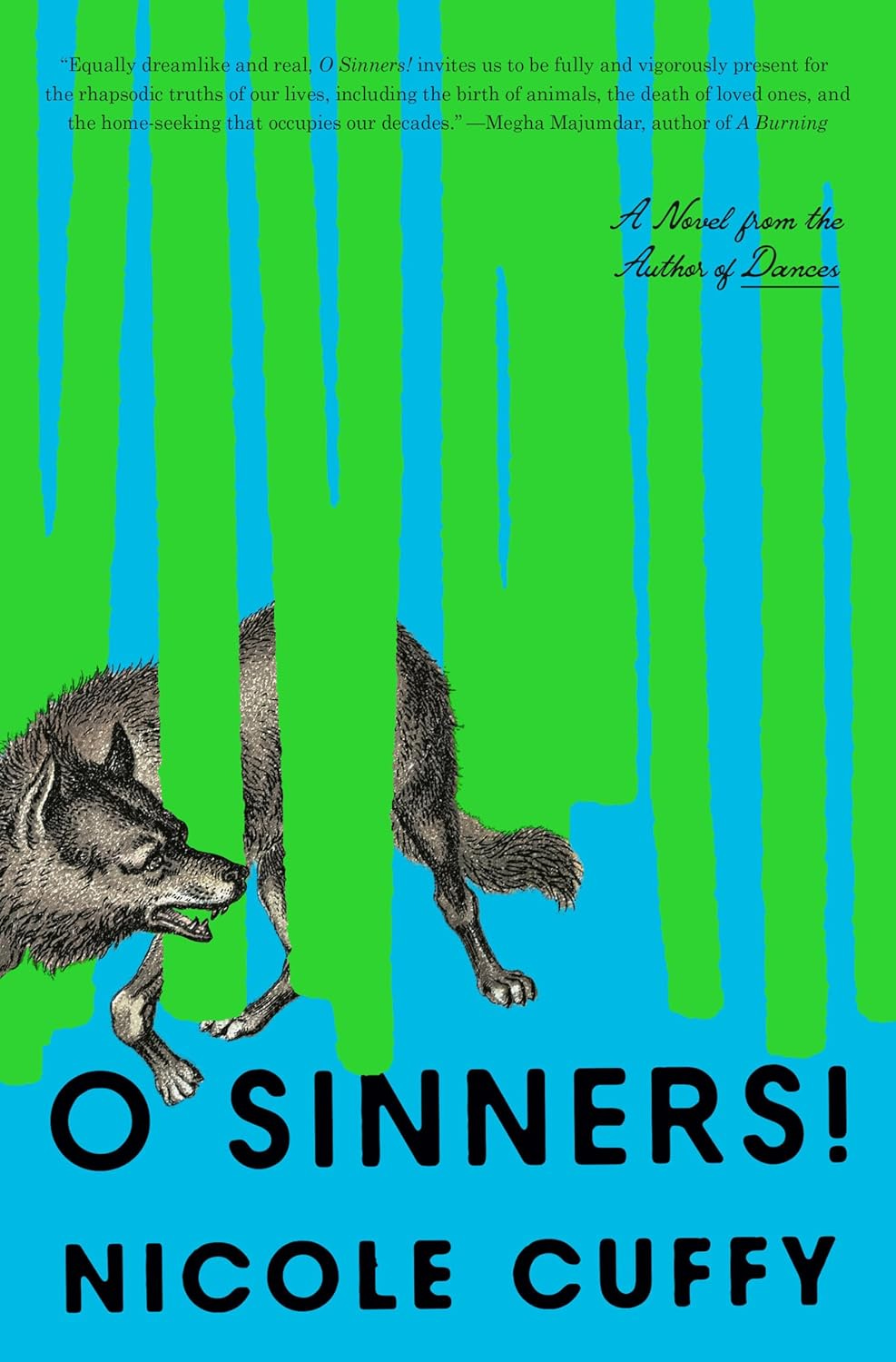
  • My book club is reading O Sinners! by Nicole Cuffy, a novel that toggles between two timelines: the Vietnam War and a modern day cult. (My copy is all crinkled from reading it in the hot tub in Palm Springs while my kids fought over an inflatable boat.) Cannot WAIT to have our book club discussion: Is every friendship group a mini cult? If you were to start a cult, what kind would it be? And would you want to lead it? (Too many logistics, I’d imagine!)
  • I scroll online vintage shops like some people scroll Instagram. And get a lot of questions about how to find the good stuff. Tess Sullivan of What’s Mine is Yours has said it better than I ever could.
  • I’m so excited Canada could become the new Australia. If not in weather and marmite, then at least when it comes to instituting a social media minimum age. You can find a ton of info about why 16 is particularly important—and how we can actually make this all happen!—at Unplugged Canada.
  • One of my favourite artists Bayonne has just announced a tour, which sadly does not include a stop in Vancouver (yet?), but if you’re in the States—or London—you’re in luck.

Thanks, y’all!
Kelsey

P.S. Backstreet Boys have announced new summer tour dates and if you’re wondering whether you should go ex-Sphere-ience it for yourself, here’s your answer.

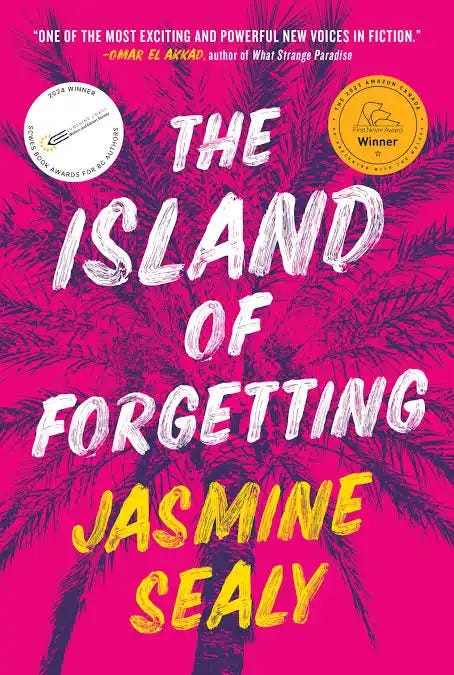
P.P.S. Speaking of modern takes on classic literature… I spoke with Jasmine Sealy, author of the Odyssey-inspired beach read The Island of Forgetting, about loving Heated Rivalry and hating crafting. And you can listen to—or watch!—our conversation right here.

Subscribe to The Waited to get posts right in your inbox.
So you want to host an Anxious Generation book club?

I’ve had many questions from parents (okay fine: moms. They were all moms.) about how we hosted an Anxious Generation book club at my kids’ school. It was a fun evening and word spread—there’s real momentum behind the being-smart-about-smartphones movement right now, thanks in large part to author Jonathan Haidt’s tireless advocacy (pictured above with Oprah and Dr. Becky).

So if you’re Anxious Generation book club-curious—and oh! How I encourage you to be!—then I can’t recommend it enough. The discussion was fascinating because everyone has something to contribute to it, even if they hadn’t finished the book before the meeting (me. That was me. And I was the one facilitating the discussion).

Here’s how we held our Anxious Generation book club in nitty gritty detail:

First, figure out what works for you

We wanted our event to be low-key and low-pressure—even for those of us who brought it to life. We wanted the conversation to be casual and constructive so we planned the whole thing with that in mind.

Reach out to your parent group and school admin

Those of us who organized our book club were already on the parent group executive (but if we weren’t, we would have reached out to them first) so our first step was to get our admin on board, which they very much were. Our vice principal even attended.

We set a date a little over a month in advance to give everyone time to read the book beforehand (I may have been the only one who failed at that!).

Collect RSVPs

We sent an invitation in the school e-newsletter and collected RSVPs (via email). We knew we’d have about 20 parents and caregivers in attendance so we booked our school’s library in the evening (we like a 6:30 start but there’s no magic to it) and planned to run 60-90 minutes (there is, however magic to determining an end time in advance!).

Borrow what works from your other book clubs

When I’m feeling ambitious in my real-world book club, I encourage everyone to come prepared with one question to pose to the group. They don’t even have to have an answer—it’s simply a way to encourage everyone to participate and keep the discussion moving. If that feels right for your Anxious Generation book club: go for it!

Cans and canapés

We brought baked goods and Bublys because we’re the hosts with the mosts—and also because we’ve found little gestures like that add warmth to our events. Don’t ask me why: they just do. But! If that feels like a bridge too far, you could absolutely skip this step.

Low-key, low-pressure preparation

Come how you are, learn from each other. Approach the whole thing like a conversation—don’t let the pressure of preparation stop you from participating. (The fact I hadn’t finished the book before facilitating the book club turned out to be totally okay.)

We *did* have a list of questions prepared in advance in case conversation lulled, which it never did, so we never needed them, but they were a nice security blanket.

I’d recommend having some questions in your back pocket, even if only for your own sanity. This could be as simple as having Jonathan Haidt’s thought-starters handy on your phone. Or printing them out in advance if you’re analog like that.

Set the tone

We had the space to set chairs out in a circle, which reemphasized the conversation vibe, though that would likely only work with a group of a certain size.

We began by reminding everyone this was a safe space and to be extra respectful of everyone’s opinions, which I would like to think everyone would have been even without the reminder, but it’s worth stating explicitly to help set everyone’s minds at ease.

Get people talking

Because I am disciple of Priya Parker, who speaks often about “Magical Questions,” we kicked things off by having everyone introduce themselves and answer two questions that reflect major themes in the Anxious Generation:

– How old were you when you first got a phone?
– And how old were you when you were allowed to roam your neighbourhood freely?

Bonus points: take notes

If someone at your event is so inclined—and someone at ours was!—make note of the resources people mention during the meeting. Then share them with your school community afterward. I would let everyone know that’s happening, though, so everyone feels comfortable with what they choose to share—and everyone’s crystal on what’s being documented.

A major resource that came out of our event was Unplugged Canada, a group of parent volunteers who are currently advocating for Canada to become the new Australia, I.e. to set a social media minimum age of 16.

One last thought

One of the most fascinating things about our Anxious Generation book club was that the group makeup was different from that of our usual school parent events. Often our parent meetings are majority moms, but the Anxious Generation brought out many more dads than usual. And every single one of them worked in tech. Make of that what you will.

Questions? Ask away!

Send me a note at KDundon@TheAnthology.ca. If this is a topic you’re also passionate about (and I’m assuming it is, if you’ve gotten this far!), read my Op-Ed for the Vancouver Sun about phones in school: Algebra vs. the Algorithm. And subscribe to my Substack: The Waited to get updates (and inspiration!) straight to your inbox.
Thank you! Have fun! Let me know how it goes!

“I like making sh*t up…”

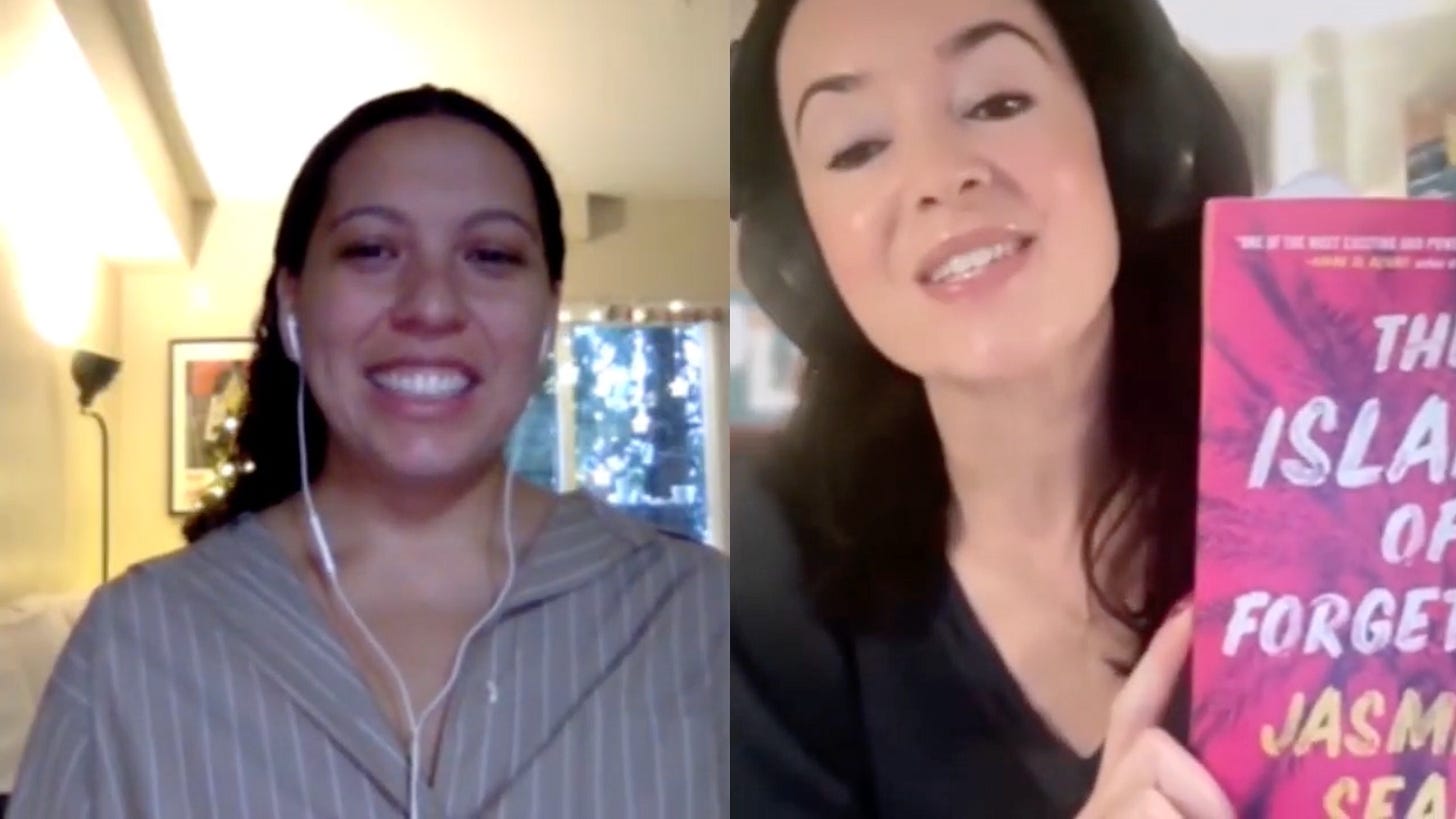
A conversation with Jasmine Sealy, author of The Island of Forgetting, about writing, reading, mentoring, parenting, and forgetting what’s in your own book…

This post first appeared on The Waited on Substack.

Jasmine Sealy, the award-winning author of The Island of Forgetting, judges prestigious literary prizes, speaks at sold-out events and teaches at the world-renowned University of British Columbia.

But perhaps her most noteworthy distinction is the fact that, as you will hear in our interview, she was the first person to tell me about Heated Rivalry (we recorded this back in December! I have not been living under a rock!).

In the very first episode of The Waited podcast, we talk about the magic of getting encouragement at just the right time. In fact, it was a conversation with the novelist Alix Ohlin that prompted Jasmine to turn a short story she’d written for her MFA into her novel.

(If you’re in Vancouver, Alix Ohlin is going to be interviewing the great George Saunders at a Writers Festival event this coming Friday and you can grab tickets here.)

We talk about the logistics of creative work when you have young kids. “You carve out these windows,” she says. “The little one’s napping for an hour and a half and so, ‘Okay: Go!’”

We discuss trying to follow up your first book when everything in your life has changed. “It’s scary,” she says. “Because when you sit down to do it again, you’re like, ‘I don’t even remember how I did that. So how am I supposed to do it again?’”

We talk about her guilty pleasure: romance novels; specifically, how easy they are to read and how hard they are to write. “I’ve sat down and tried and I can’t do it,” she says. “I could write like an All Fours kind of dark, edgy romance, but the earnestness that goes into writing a happily ever after, particularly like a comedy or like a rom-com, they are so hard to write.”

And we talk about the bane of her existence: crafting. “Do you know how difficult it is to be a mother of young children when you hate crafts?!”

Watch/listen on Substack.

Thanks, y’all! And thank you, Jasmine, most of all!

Kelsey

P.S. If you’re a writer in Vancouver, you can register for Jasmine’s workshop at the Vancouver Public Library How to Begin: Inspiration as Process on Wednesday, February 4th right here. (I took one of her workshops in the summer and let me tell you: it was manuscript-changing!)

P.P.S. Pick up The Island of Forgetting, a modern literary Odyssey-inspired beach read—we read it for our book club (before Jasmine joined!) and it was a mega hit.

Fake fresh starts are my favourite

A workbook I swear by, resolution relief and the forgotten sound of a phone ringing throughout your house.

This post first appeared on The Waited on Substack.

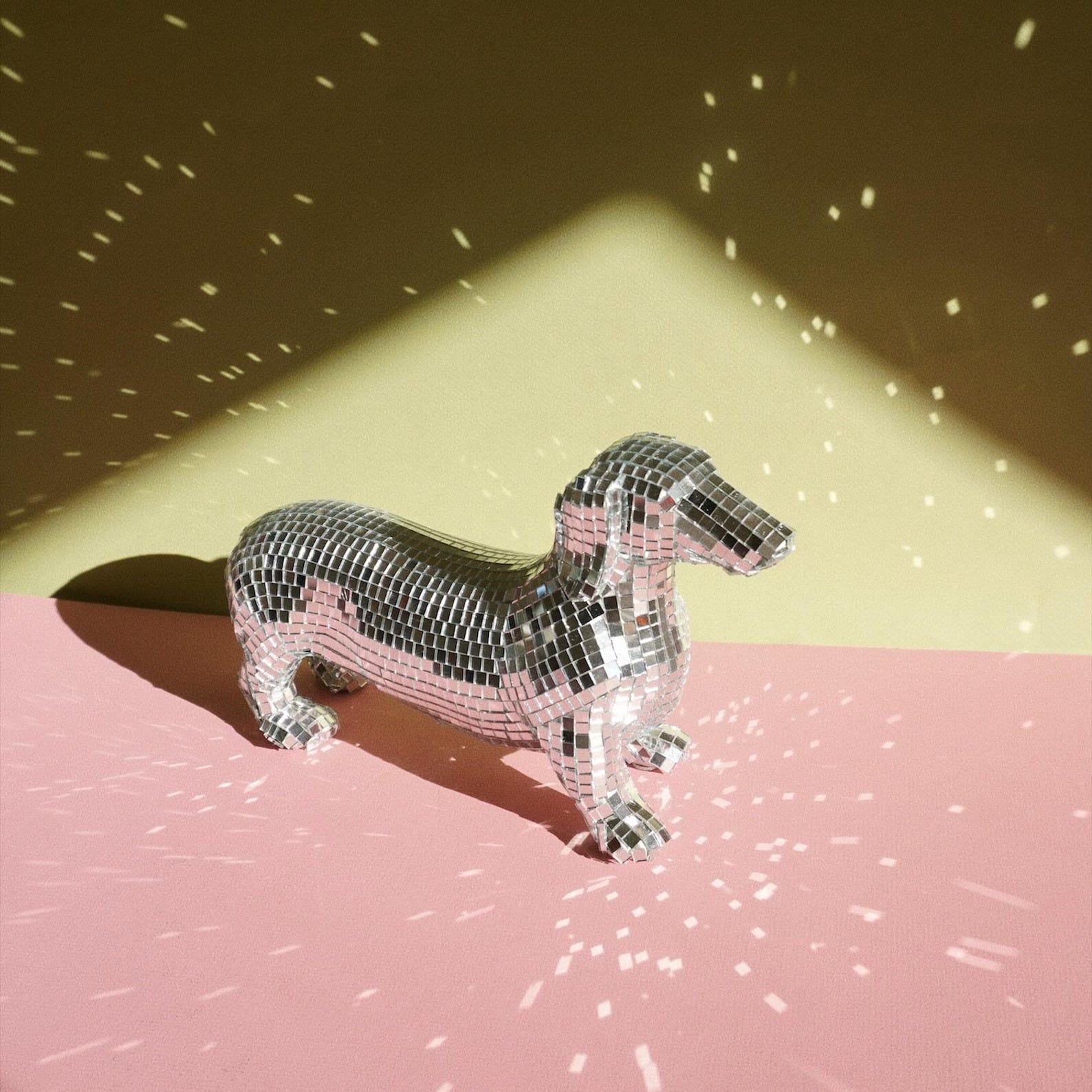
Your home definitely needs a disco dachshund by AMCLUBShop on Etsy.

I take New Year’s very, very seriously. Not in the way some people do where they wait for hours in Times Square for the ball to drop (where do they pee?), but in the fresh start, clean slate sense of the day.

I don’t make resolutions because I can never think of good ones (eat better? Watch less Netflix? Go to bed earlier? Boring!) and even if I could I would never stick to them. I’ve tried Dry January a few times, but I never last because I have too many Capricorn birthdays to celebrate.

Resolve to read more of The Waited…

But this time of year I do get contemplative and goal-setty because, as Lisa Kholostenko wrote in her Empty Calories Substack, New Year’s is “a holiday oriented toward the future. It asks us, briefly, to partake in a collective suspension of disbelief: that something can end cleanly and start fresh overnight, that midnight can function as a guillotine.”

And here we are, on the other side of that guillotine.

I love the fake fresh start this time of year offers: there’s no stress like when you start a new job, no body horror like when you have a baby, no turmoil like when you move. Things are only different if you decide they’re different.

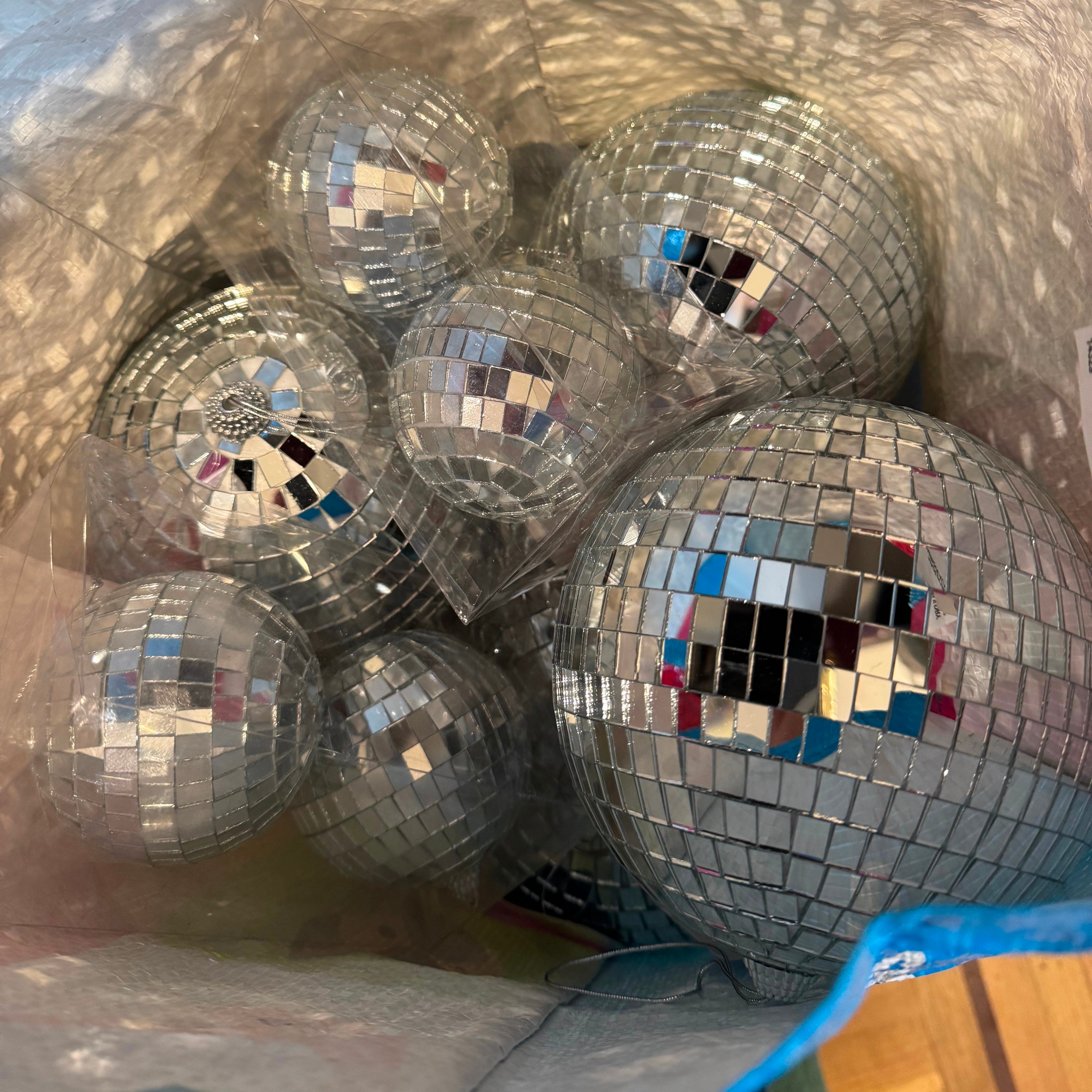
We transformed our house into a dollar store disco for our NYE party and I fully intend to keep these up all January.

New Year’s to me is both the calm and the storm. We host a lot this time of year (we have many family birthdays), but school and extracurricular activities stop, work slows down. So it’s chill and chaotic.

In between all the hosting and partying and disco ball-buying, I printed off the gigantic Unravel Your Year workbook by Susannah Conway, something I’ve been doing since New Year’s 2018 when one of my friends who worked in tech (and who I would have NEVER in a million years expected to do this sort of thing) sent it to me.

It takes forever. Requires time and space and more handwriting than you’ve done since English 426. And I swear it works.

So for whoever it was who asked me for the link—here it is! Let me know if you do it?

I may not make resolutions, but I do make lists. I’m very ritualistic (superstitious?) about them. I wrote out my first goal-list when I left my former ad agency to start my own in 2011. I don’t remember everything that was on it—I really should dig it up—but it was things like contribute articles, land speaking engagements, teach workshops, blah blah blah.

I became obsessive about writing out these lists when I looked back on that first one and saw I’d achieved everything on it, except the thing I put number one: write a book. Way back then it didn’t even make sense for that to be on there because I was solely focused on copywriting and the like. (You can read about how and when that changed here.)

But I see now I was working on my book before I was actually working on my book.

Fast forward to 2025, which was for me a leap year with a lowercase l. The first thing I put on my goal-list for 2025 was find a literary agent. (If you’re interested in how I landed an agent, send me a note? I get the sense more of you are readers than writers, but lemme know if I’m wrong!)

Haven’t made my list for 2026 yet, but I’m hoping it’ll also be infused with magic.

Can’t wait

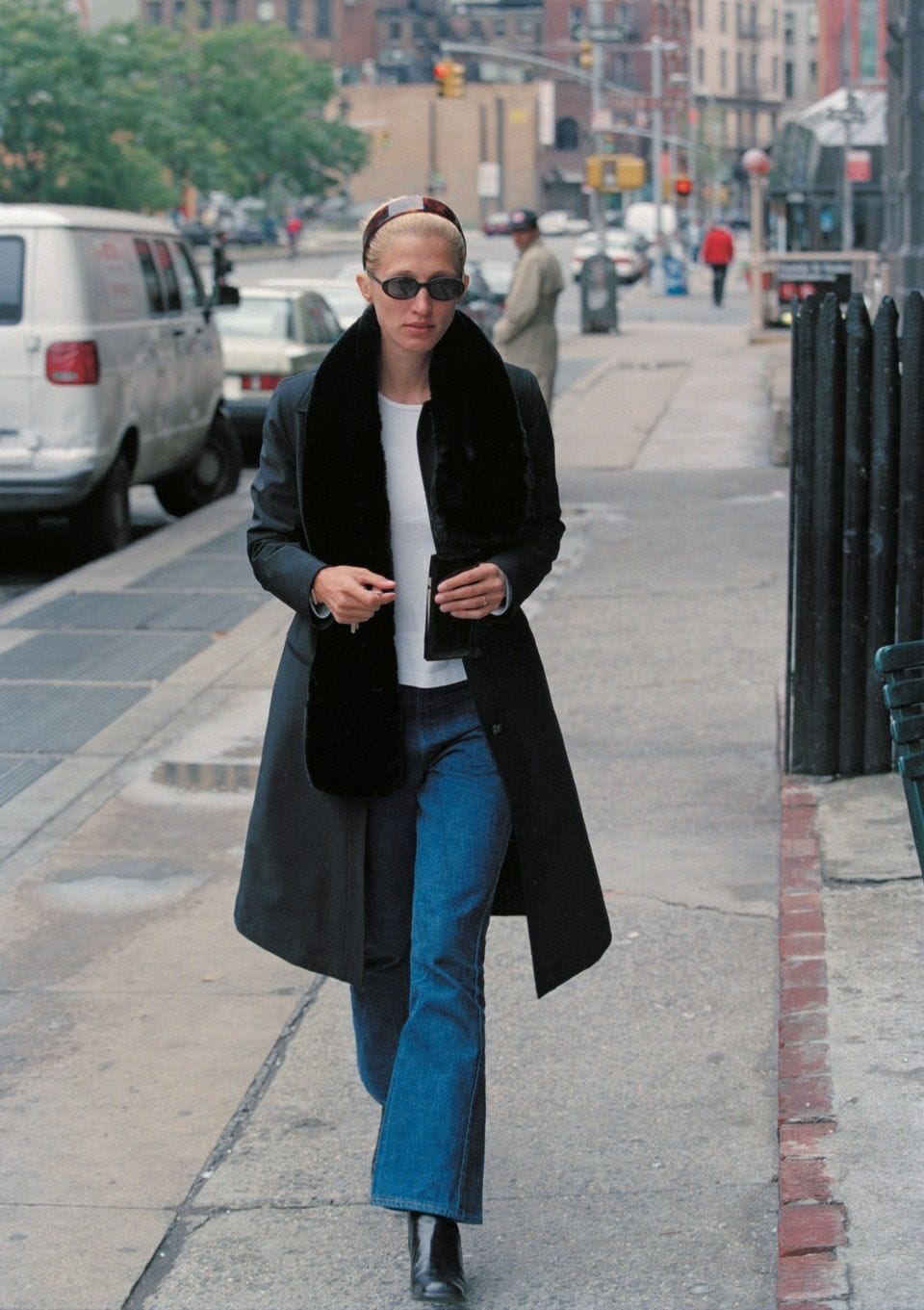
What will this year hold? Jessica DeFino of Flesh World has beauty industry predictions for 2026, Ted Gioia predicts even more vintage shopping, and I have one hyper specific prediction for 2026: the return of the Carolyn Bessette-Kennedy-length coat (thanks to next month’s American Love Story) which you’d fully be able to score vintage. Oh, that and stainless steel kitchen and dining table accents.

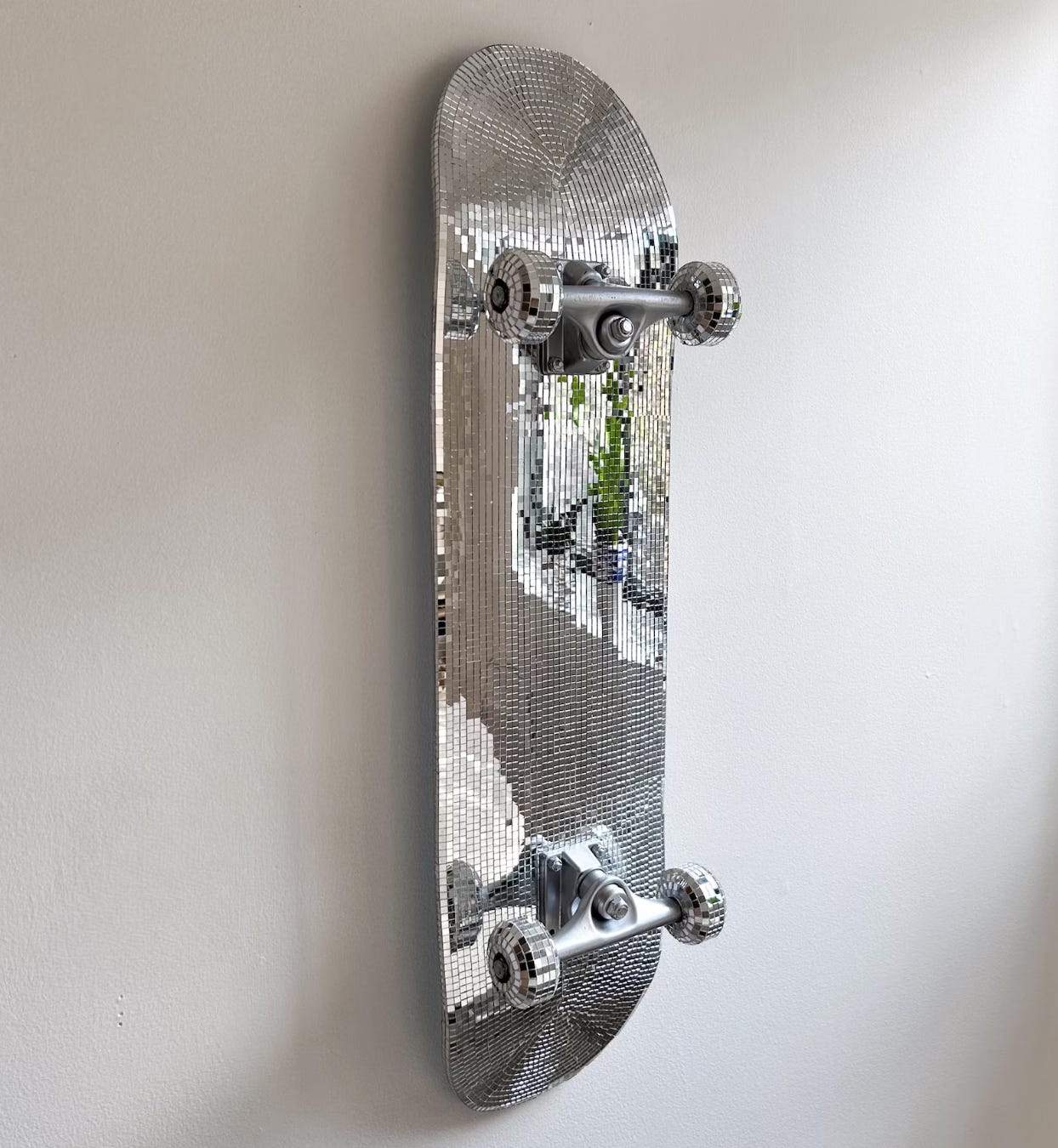
A disco ball skateboard I kind of need, by Montreal’s Fayality on Etsy.

Thank you!

After I wrote an Op-Ed for the Vancouver Sun about getting personal devices out of classrooms (you can read it here—along with the backstory because I finally figured out why I’ve cared about this long before my kids were old enough for it to get messy).

I got so many notes from so many of you who are also on this mission. Thank you! Here are a few of the resources you’ve shared:

  • How the New York public school phone ban saved high school, in NY Mag (thank you, Verity!)
  • Nine ways to say “Not yet” to smart phones (thank you, Leah!)
  • The Brick app (thanks, T!)
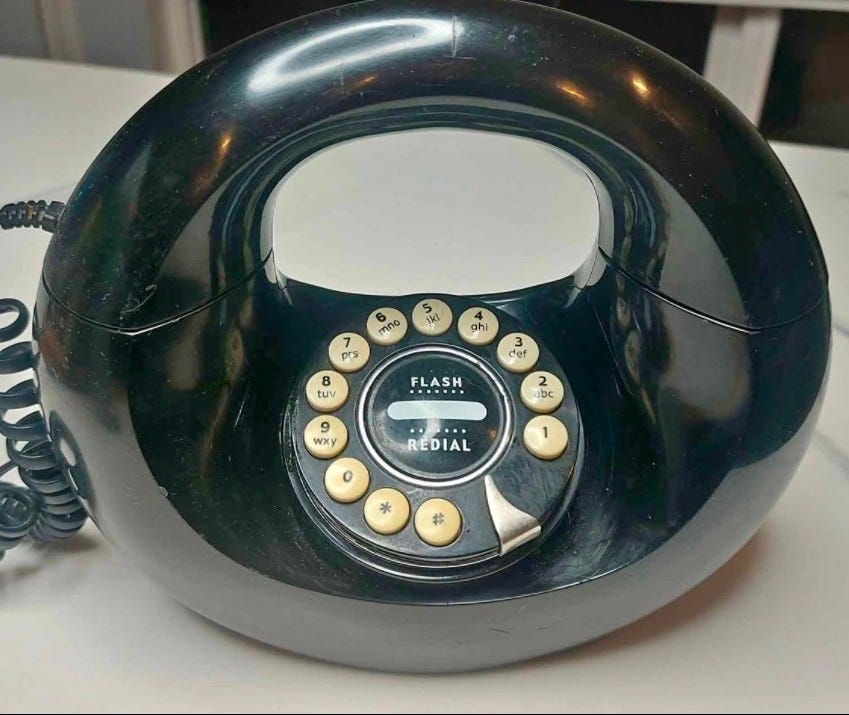
  • In case you too were wondering whether you need a physical phone line in order to get a landline for your place—you don’t! You can do it through the internet. And I have to say: it’s wild hearing a phone ring throughout the house when my kids’ friends call them. It’s like we’ve transformed ourselves into a 90s household.

A friend and I are going to be meeting with an MP (Member of Parliament for those of you outside Canada!) about devices and kids. And I’m thinking of pitching a segment to a morning show to go along with it because I want to make these changes actually happen. So if you have any suggestions for how to build on this momentum, please send them my way?

Thanks, y’all! And Happy New Year! May your lists be long and your dogs: disco!

Kelsey

P.S. Do you also kind of wish you spent a cringey NYE with the Backstreet Boys?

P.P.S. Subscribe to The Waited on Substack to get posts directly to your inbox.
Algebra vs. the algorithm

Vancouver school board’s ‘device ban’ isn’t working. For the sake of our teachers, administrators and students, we need to remove personal devices from the classroom for real.

By Kelsey Dundon for The Vancouver Sun.

It’s been almost two years since the Province announced Personal Digital Device Restrictions in Schools to much fanfare and the collective relief of everyone familiar with Jonathan Haidt’s book The Anxious Generation. The goal of the device ban is solid: to remove distractions from classrooms and allow students to focus on learning.

The only problem?

Each school district has developed its own policy and it’s become clear the Vancouver School Board’s policy in its current form is ineffective and ultimately puts too much strain on teachers, administrators and students.

In case you need a refresher, the VSB’s current device policy for secondary school students is essentially this: personal digital devices must be turned off or placed on silent mode before entering the classroom and during instructional time.

Ask any high school teacher what that means in practice and they’ll probably tell you smartphones are hidden under the desk or tucked behind books. From there, students spend classes scrolling and texting and doing all the things these brilliantly designed devices make far too difficult for even the most iron-willed among us to resist.

It’s not students’ fault. These devices are dopamine drips.

Asking a student to resist the allure of the smartphone is unfair—even for those who are able to white-knuckle it—because research has found when it comes to smartphones, willpower drains brainpower.

You may have heard of the Phone Proximity Effect, where the mere presence of a smartphone requires so much cognitive power to resist its temptations, it reduces the cognitive capacity available for other things. Like learning. And that study was conducted on adults. I can’t even imagine trying to focus on Math 9 when TikTok is in my pocket; algebra doesn’t stand a chance against the algorithm.

We need to remove personal devices from the classroom for real. 

We could follow the lead of pioneering independent schools in our region whose device bans mean smartphones are locked away all day. We could join the ranks of forward-thinking schools around the world that require phones to be stored during the school day in Yondr pouches—the same technology you might find at a concert or a comedy show. Or the VSB could simply adopt for secondary schools what is already in place for its elementary schools: phones are restricted for the entire instructional day, including class time, recess and lunch. Though I hope it goes without saying there should still be exceptions—as in the VSB’s current policy—for students who need to use a device to support medical or diverse educational needs.

School districts with effective bell-to-bell device bans have found students’ test scores have improved significantly, especially for low-achieving students. They found students connect better with each other in class and during breaks; they even found students check out more library books.

Because when we actually remove smartphones from school in a thorough, clear-cut manner, we take the pressure off teachers and administrators from having to waste precious class time policing them (their plates are already overflowing!). And we free up students’ cognitive capacity for concentrating on the things that actually matter.

A common refrain I hear from fellow parents is how relieved we are that we didn’t have smartphones and social media when we were growing up. That’s a gift we can give our children—at the very least during their school day.

Subscribe to my e-newsletter on Substack and follow @KelseyDundon on Instagram.